Home

Main menu

  • About ETI
    • Our members
      • Public reporting performance
    • Who we are
      • ETI's origins
    • What we do
    • Global presence
    • Governance
    • Our team
      • ETI Board members
    • Our Strategy
  • Home
  • Why ETI
    • Why join ETI
  • ETI Base Code
    • Base Code overview
    • Base Code clause 1: Employment is freely chosen
    • Base Code clause 2: Freedom of association
    • Base Code clause 3: Working conditions are safe and hygienic
    • Base Code clause 4: Child labour shall not be used
    • Base Code clause 5: Living wages are paid
    • Base Code clause 6: Working hours are not excessive
    • Base Code clause 7: No discrimination is practiced
    • Base Code clause 8: Regular employment is provided
    • Base Code clause 9: No harsh or inhumane treatment is allowed
  • Our approach
    • Membership
    • Programmes
    • Transparency
    • Meaningful stakeholder engagement (MSE)
  • Our expertise
    • Climate change & Just transitions
    • Crisis response
    • Gender equity in supply chains
    • Worker representation
    • Forced labour & modern slavery
    • Responsible purchasing practices
      • RPP in manufacturing
    • Human rights due diligence
      • HRDD legislation tracker
  • Resources
    • Guidance & reports
    • Blog
      • Blog series: Tackling gender-based violence through GRACE
    • Issues
      • Human rights due diligence (HRDD): a complete guide for business
        • What is human rights due diligence?
        • Human rights due diligence legislation and regulatory requirements
        • How to implement human rights due diligence in your company
        • HRDD risk assessment for supply chains
        • Supplier engagement and human rights due diligence
      • Forced labour & modern slavery: a complete guide for business
        • What is modern slavery? Definitions, forms and scale
        • How to identify forced labour in your supply chain
        • Remediation: what to do when forced labour is found
        • Modern slavery legislation: what businesses need to know
        • EU Forced Labour Regulation: what it means for your business
        • How to write a modern slavery statement
        • High-risk sectors and sourcing regions for forced labour
        • Forced labour and migrant workers in supply chains
      • Responsible purchasing practices: what they are and why they matter
        • How to implement responsible purchasing practices
        • Responsible purchasing practices and legislation: what companies need to know
        • Responsible purchasing practices by sector
    • Case studies
    • Training
    • Events
      • ETI Insights series
    • Impact report 2024-25

Breadcrumb

  1. Home
  2. blog

Transparency Index a “much-needed wake-up call” as Bangladesh marks fifth anniversary of Rana Plaza disaster

  • Share on Facebook
  • Share on Twitter
  • Share on LinkedIn
  • Peter McAllister - ETI
  • 23 April 2018
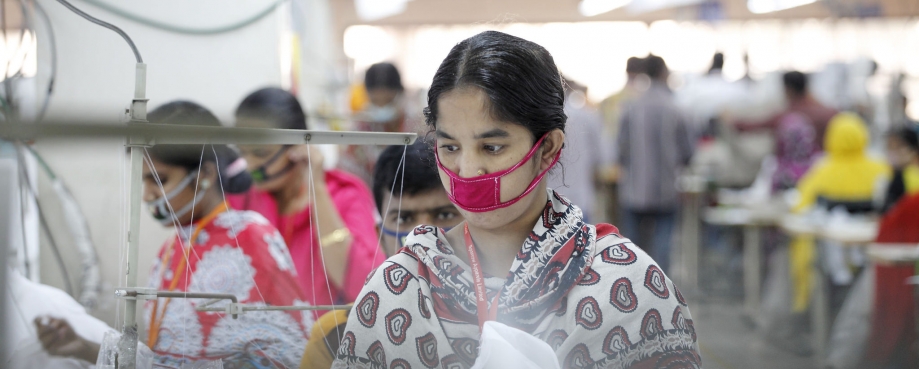
Garment workers in Bangladesh courtesy of the ILO

Today (23 Apr), Fashion Revolution publishes its Fashion Transparency Index 2018, which reviews and ranks 150 global brands and retailers on their social and environmental policies, practices and impact. This coincides with the fifth anniversary of the Rana Plaza disaster (24 April), when 1,134 workers lost their lives in a factory collapse in Bangladesh.

Responding to the launch of the 2018 Fashion Transparency Index, ETI's Executive Director Peter McAllister said: “In 2013, more than 1,100 workers lost their lives in one of the world’s worst industrial disasters.

"Rana Plaza cast a spotlight on Bangladesh’s garment industry and the international brands that source from it. In many cases, brands were only identified after investigators discovered their garments in the rubble.

"As we look back, it's important to recognise the role that greater openness and accountability can play in ensuring such a disaster never happens again. 

"Without greater transparency from brands, there will continue to be hidden situations where poor conditions and exploitation can thrive. 

“That’s what makes the Fashion Transparency Index so valuable.

"Greater transparency means greater scrutiny and accountability. It means exploitation has fewer places to hide. It’s also an opportunity for businesses to build trust, and to show their customers and the public that they’re serious about workers’ rights.

“Many of the companies we work with already see it that way, and we are pleased to see four ETI members – C&A, Gap, H&M, and M&S – amongst the top ten performers.

"While greater transparency is fast becoming the ‘new normal’, there is still a long way to go. Unfortunately, many businesses are yet to even start their journey, and for these companies, we hope the report will be a much-needed wake up call.

"They can and must do better.”

ETI's blog covers issues at the intersection of business and human rights. We feature posts by, for and from our members and allies; we do not accept or offer payment for posts or publish content outside of these criteria. We welcome a range of insights and opinions from our guest bloggers, though don't necessarily agree with everything they say.

Stay up to date

Stay up to date with the latest from ETI via the following channels:
  • Email
  • Twitter
  • LinkedIn
  • Blog RSS

Related content

  • Do you think fast fashion can ever be ethical?
  • Child labour: is it on the increase, or did it ever go away?
  • Joint recommendations for responsible business conduct in Bangladesh
  • The road to greater business transparency
  • Accountability in supply chains – the UK government defends its record
  • My new yoga pants - and their link to Bangladesh wages

Get the latest

Subscribe to our email newsletters and stay up to speed on responsible business.
Subscribe

ETI elsewhere

  • Twitter
  • LinkedIn
  • YouTube

Footer

  • ETI Community
  • Accessibility
  • Contact
  • FAQ
  • Jobs at ETI
  • Press resources
  • Security & privacy
Other ETIs: Bangladesh, Denmark, Norway, Sweden
Ethical Trading Initiative | Registered No. 3578127