Home

Main menu

  • About ETI
    • Our members
      • Public reporting performance
    • Who we are
      • ETI's origins
    • What we do
    • Global presence
    • Governance
    • Our team
      • ETI Board members
    • Our Strategy
  • Home
  • Why ETI
    • Why join ETI
  • ETI Base Code
    • Base Code overview
    • Base Code clause 1: Employment is freely chosen
    • Base Code clause 2: Freedom of association
    • Base Code clause 3: Working conditions are safe and hygienic
    • Base Code clause 4: Child labour shall not be used
    • Base Code clause 5: Living wages are paid
    • Base Code clause 6: Working hours are not excessive
    • Base Code clause 7: No discrimination is practiced
    • Base Code clause 8: Regular employment is provided
    • Base Code clause 9: No harsh or inhumane treatment is allowed
  • Our approach
    • Membership
    • Programmes
    • Transparency
    • Meaningful stakeholder engagement (MSE)
  • Our expertise
    • Climate change & Just transitions
    • Crisis response
    • Gender equity in supply chains
    • Worker representation
    • Forced labour & modern slavery
    • Responsible purchasing practices
      • RPP in manufacturing
    • Human rights due diligence
      • HRDD legislation tracker
  • Resources
    • Guidance & reports
    • Blog
      • Blog series: Extreme heat and risks to workers
      • Blog series: Tackling gender-based violence through GRACE
    • Issues
      • Human rights due diligence (HRDD): a complete guide for business
        • What is human rights due diligence?
        • Human rights due diligence legislation and regulatory requirements
        • How to implement human rights due diligence in your company
        • HRDD risk assessment for supply chains
        • Supplier engagement and human rights due diligence
      • Forced labour & modern slavery: a complete guide for business
        • What is modern slavery? Definitions, forms and scale
        • How to identify forced labour in your supply chain
        • Remediation: what to do when forced labour is found
        • Modern slavery legislation: what businesses need to know
        • EU Forced Labour Regulation: what it means for your business
        • How to write a modern slavery statement
        • High-risk sectors and sourcing regions for forced labour
        • Forced labour and migrant workers in supply chains
      • Responsible purchasing practices: what they are and why they matter
        • How to implement responsible purchasing practices
        • Responsible purchasing practices and legislation: what companies need to know
        • Responsible purchasing practices by sector
      • UK mandatory human rights due diligence: what businesses need to know
    • Case studies
    • Training
    • Events
      • ETI Insights series
    • Impact report 2024-25

Blog

ETI responds to Oxfam report on poor conditions in supermarket supply chains

21 June 2018
ETI responds to the launch of Oxfam's Behind the Barcodes campaign looking at supermarket business practices.

Understanding vulnerability to forced labour in global supply chains

21 June 2018
Find out how broad patterns of exploitation linked to very low wages mean that just one trigger can tip workers into severe abuse including forced labour.

ETI responds to ICN report on its work in Tamil Nadu

20 June 2018
ETI responds to ICN report on its work in Tamil Nadu

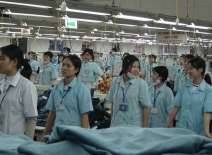
VIDEO: Combating modern slavery in Chinese and South East Asian supply chains

13 June 2018
This informational video defines modern slavery, highlights relevant international and national conventions and provides step-by-step guidance on what to do if managers and owners discover modern slavery in their factories.

Four partnerships that address some of the complex challenges in global supply chains

12 June 2018
We’ve initiated four projects that bring together NGOs and trade unions in partnership with member companies to tackle some specific challenges in today’s global supply chains.

Workers worldwide face a tougher, more violent environment as they seek to defend their rights

8 June 2018
Worldwide, workers are facing a tougher and more violent environment as they seek to defend their rights. The ITUC’s Global Rights Index, the launch of which I attended this week at the ILO, shows a serious increase in the abuse of fundamental rights and violence towards those trying to defend them.

Free debate: What make workers vulnerable to modern slavery?

7 June 2018
What drives modern slavery in global supply chains? Who is most vulnerable? And how do we stop it? Latest research findings from leading global experts.

Businesses need to act now on human rights or face the consequences later – and the OECD has set the standard

7 June 2018
The OECD has just published the most authoritative, detailed guidance yet for businesses looking to prevent and tackle human rights abuses and other harmful impacts in their supply chains.

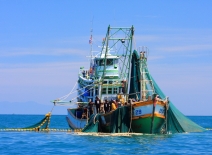
New fishers’ union should be watershed for workers in Thai fishing industry

30 May 2018
This week, the International Transport Workers’ Federation launched the first independent, democratic union for fishers in Thailand – the Fishers’ Rights Network. ETI’s Nick Kightley reflects on what this could mean for the fishing industry in Thailand.

Social dialogue is key to decent work – new report dissected

30 May 2018
The Global Deal's first report underlines the strong business case for responsible business conduct and its different components, including due diligence and social dialogue.

Strengthening public-private cooperation to end migrant worker abuse in Italy’s tomato industry

29 May 2018
Risk mitigation and supporting their Italian supply chains is an increasing priority for international companies. That means collaboration.

Matrix APA checks out the impact of the new China Environment Tax on supply chains

24 May 2018
ETI member, Matrix APA, surveyed its Chinese suppliers about an important new green initiative, an environment tax, that seeks to help improve the environmental impact of Chinese businesses. Here they detail their findings.

Pagination

  • Previous page ‹‹
  • Page 47
  • Next page ››

Get the latest

Subscribe to our email newsletters and stay up to speed on responsible business.
Subscribe

ETI elsewhere

  • Twitter
  • LinkedIn
  • YouTube

Footer

  • ETI Community
  • Accessibility
  • Contact
  • FAQ
  • Jobs at ETI
  • Press resources
  • Security & privacy
Other ETIs: Bangladesh, Denmark, Norway, Sweden
Ethical Trading Initiative | Registered No. 3578127