Home

Main menu

  • About ETI
    • Our members
      • Public reporting performance
    • Who we are
      • ETI's origins
    • What we do
    • Global presence
    • Governance
    • Our team
      • ETI Board members
    • Our Strategy
  • Home
  • Why ETI
    • Why join ETI
  • ETI Base Code
    • Base Code overview
    • Base Code clause 1: Employment is freely chosen
    • Base Code clause 2: Freedom of association
    • Base Code clause 3: Working conditions are safe and hygienic
    • Base Code clause 4: Child labour shall not be used
    • Base Code clause 5: Living wages are paid
    • Base Code clause 6: Working hours are not excessive
    • Base Code clause 7: No discrimination is practiced
    • Base Code clause 8: Regular employment is provided
    • Base Code clause 9: No harsh or inhumane treatment is allowed
  • Our approach
    • Membership
    • Programmes
    • Transparency
    • Meaningful stakeholder engagement (MSE)
  • Our expertise
    • Climate change & Just transitions
    • Crisis response
    • Gender equity in supply chains
    • Worker representation
    • Forced labour & modern slavery
    • Responsible purchasing practices
      • RPP in manufacturing
    • Human rights due diligence
      • HRDD legislation tracker
  • Resources
    • Guidance & reports
    • Blog
      • Blog series: Extreme heat and risks to workers
      • Blog series: Tackling gender-based violence through GRACE
    • Issues
      • Human rights due diligence (HRDD): a complete guide for business
        • What is human rights due diligence?
        • Human rights due diligence legislation and regulatory requirements
        • How to implement human rights due diligence in your company
        • HRDD risk assessment for supply chains
        • Supplier engagement and human rights due diligence
      • Forced labour & modern slavery: a complete guide for business
        • What is modern slavery? Definitions, forms and scale
        • How to identify forced labour in your supply chain
        • Remediation: what to do when forced labour is found
        • Modern slavery legislation: what businesses need to know
        • EU Forced Labour Regulation: what it means for your business
        • How to write a modern slavery statement
        • High-risk sectors and sourcing regions for forced labour
        • Forced labour and migrant workers in supply chains
      • Responsible purchasing practices: what they are and why they matter
        • How to implement responsible purchasing practices
        • Responsible purchasing practices and legislation: what companies need to know
        • Responsible purchasing practices by sector
      • UK mandatory human rights due diligence: what businesses need to know
    • Case studies
    • Training
    • Events
      • ETI Insights series
    • Impact report 2024-25

Blog

Labour rights campaigner Andy Hall pictured in Thailand

Damaging ‘Brand Thailand’: Reaction to court ruling against labour rights advocate, Andy Hall

28 March 2018
Thailand’s Prakanong Court in Bangkok has just ordered business and human rights advocate, Andy Hall, to pay 10 million baht (£225,957) in civil damages plus legal and court fees to pineapple company Natural Fruit Co Ltd.
Photo by Paula Bronstein/Getty Images Reportage.

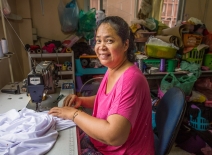
The Leadership Series: how can international brands ensure that homeworkers are treated fairly?

27 March 2018
With the help of specialist NGOs such as WIEGO and Homeworkers Worldwide, ETI's company members have been working to improve the lives of homeworkers in their supply chains. Yet huge issues remain.
Cambodian workers

Brand and retail groups urge Cambodia to respect workers’ rights

21 March 2018
A group representing major international brands and retailers from the US and Europe has written to the Cambodian Government calling for action on labour rights and expressing “growing concern” over recent developments that appear to weaken protection of human rights. 
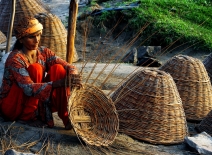
A women making baskets © ILO-Khalil-ur-Rehman Waleed

Can Pakistan become a leader in creating decent work?

21 March 2018
Sindh has a population of 46 million people, roughly the same as Spain, and its progressive new Labour Policy matters.
Image courtesy of shutterstock

Identifying high performance collaboration between buyers and suppliers

16 March 2018
If you are a Buying Director, a Buyer – either senior or junior – or hold a position where purchasing or sourcing is one of your key responsibilities we want to hear you.
Image of hospitality sector worker courtesy of Shutterstock

Five ways to stop exploiting women in high risk workforces

15 March 2018
Women workers in highly feminised labour sectors are subject to specific workplace risks, discrimination and gender related abuse and violence. This, ETI member FLEX argues, presents challenges around reach, trust and detection.

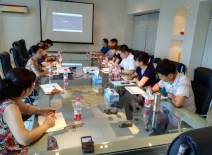
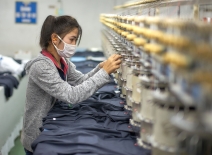
“There’s a fly in my water!” Building quality management into workforce practices in China

13 March 2018
ETI member Matrix APA (UK) Ltd. and its partner, Xiangshan Dasheng Knitting Co Ltd. in China explore Quality Management as part of an ethical approach to business and human rights.

Ending exploitation of women in international supply chains

8 March 2018
We brought together 10 brands and the University of Manchester to analyse progress being made in ensuring greater gender equality in international supply chains.
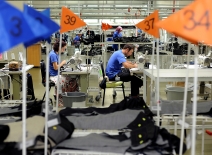
The Huasheng Garment Company's Enterprise Improvement Team

Motivating workplace cooperation in China: what companies should note

1 March 2018
Huasheng Garments factory managers were first introduced to SCORE Training when one of their buyers, British brand and ETI member White Stuff, offered to sponsor their participation in a jointly implemented ILO/ETI SCORE Training programme.

The Leadership Series: Everything a business needs to know about social dialogue and sound industrial relations

27 February 2018
In this second of our Leadership Series of monthly blogs that link business to human rights, we are told that partnerships are key to tackling challenges in the global labour market.
Lao garment worker ©ILO-Jean Pierre Pellissier

Decent work for women migrant workers

13 February 2018
Sharing lessons from the ILO/DFID 'Work in Freedom' programme in South Asia's garment and footwear sector.

Can there be fair rules for the ‘purchasing practices’ game?

8 February 2018
As part of two days of discussions, the OECD’s annual garment trade forum debated recent progress in the commercially sensitive area of purchasing practices.

Pagination

  • Previous page ‹‹
  • Page 49
  • Next page ››

Get the latest

Subscribe to our email newsletters and stay up to speed on responsible business.

Subscribe

ETI elsewhere

  • Twitter
  • LinkedIn
  • YouTube

Footer

  • ETI Community
  • Accessibility
  • Contact
  • FAQ
  • Jobs at ETI
  • Press resources
  • Security & privacy
Other ETIs: Bangladesh, Denmark, Norway, Sweden
Ethical Trading Initiative | Registered No. 3578127