Home

Main menu

  • About ETI
    • Our members
      • Public reporting performance
    • Who we are
      • ETI's origins
    • What we do
    • Global presence
    • Governance
    • Our team
      • ETI Board members
    • Our Strategy
  • Home
  • Why ETI
    • Why join ETI
  • ETI Base Code
    • Base Code overview
    • Base Code clause 1: Employment is freely chosen
    • Base Code clause 2: Freedom of association
    • Base Code clause 3: Working conditions are safe and hygienic
    • Base Code clause 4: Child labour shall not be used
    • Base Code clause 5: Living wages are paid
    • Base Code clause 6: Working hours are not excessive
    • Base Code clause 7: No discrimination is practiced
    • Base Code clause 8: Regular employment is provided
    • Base Code clause 9: No harsh or inhumane treatment is allowed
  • Our approach
    • Membership
    • Programmes
    • Transparency
    • Meaningful stakeholder engagement (MSE)
  • Our expertise
    • Climate change & Just transitions
    • Crisis response
    • Gender equity in supply chains
    • Worker representation
    • Forced labour & modern slavery
    • Responsible purchasing practices
      • RPP in manufacturing
    • Human rights due diligence
      • HRDD legislation tracker
  • Resources
    • Guidance & reports
    • Blog
      • Blog series: Extreme heat and risks to workers
      • Blog series: Tackling gender-based violence through GRACE
    • Issues
      • Human rights due diligence (HRDD): a complete guide for business
        • What is human rights due diligence?
        • Human rights due diligence legislation and regulatory requirements
        • How to implement human rights due diligence in your company
        • HRDD risk assessment for supply chains
        • Supplier engagement and human rights due diligence
      • Forced labour & modern slavery: a complete guide for business
        • What is modern slavery? Definitions, forms and scale
        • How to identify forced labour in your supply chain
        • Remediation: what to do when forced labour is found
        • Modern slavery legislation: what businesses need to know
        • EU Forced Labour Regulation: what it means for your business
        • How to write a modern slavery statement
        • High-risk sectors and sourcing regions for forced labour
        • Forced labour and migrant workers in supply chains
      • Responsible purchasing practices: what they are and why they matter
        • How to implement responsible purchasing practices
        • Responsible purchasing practices and legislation: what companies need to know
        • Responsible purchasing practices by sector
      • UK mandatory human rights due diligence: what businesses need to know
    • Case studies
    • Training
    • Events
      • ETI Insights series
    • Impact report 2024-25

Blog

ETI-ILO successfully partner in China: 2017 SCORE Training highlights

6 February 2018
It’s been one year since ETI joined forces with the ILO to deliver SCORE Training to 17 Chinese factories which supply products to eight ETI member brands.
Cambodian fishers courtesy of ILO

Vulnerable employment is on the rise

1 February 2018
In 2017, over 40% of workers were estimated to be in vulnerable forms of employment. The ILO predicts that this will increase, particularly in emerging economies.
Vietnam garment factory ©ILO/Aaron Santos

OECD 2018 Forum on human rights due diligence in the garment and footwear sector

30 January 2018
Through our participation, we hope to promote some of the good practice of our members. But we will also highlight that much more still needs to be done to improve working conditions in global supply chains.
Vietnam garment factory image courtesy of ILO/Aaron Santos

The Leadership Series: Where business meets human rights

29 January 2018
In this introduction to our 20th Anniversary series of opinion pieces, The Leadership Series, ETI's Chair Philip Chamberlain reflects on some of the business and human rights issues that will be a key part of the ethical trade agenda in 2018 and beyond.

Small businesses can lead the way when it comes to ethical trade – here’s how

25 January 2018
SMEs get government-subsidised consultancy to advance ethical trade & human rights work. The challenges and opportunities that small businesses face in getting to grips with the business and human rights agenda.
Rice farmers ©ILO-Khalil ur Rehman Waleed

Accountability in supply chains – the UK government defends its record

19 January 2018
The government will continue to rely heavily on voluntary principles, guidance and codes of conduct, the promotion of good practice, and an expectation that the private sector will itself do more to ensure respect for labour rights in its supply chains.
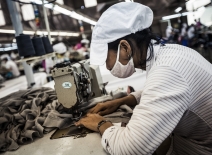
Garment factory worker © ILO-Aaron Santos

Arcadia’s squeeze on suppliers

18 January 2018
ETI’s Executive Director, Peter McAllister said that reported cuts, particularly to orders that have already been agreed, are “totally unacceptable within responsible business practice”.

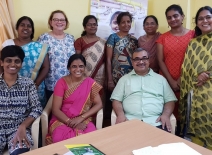
Charting the rise of a women-only trade union in India

9 January 2018
How trade unions can help improve the fabric of communities as well as workers' lives.

Primark's new teaching resources explore its international supply chain

4 January 2018
Resources that explore Primark’s business in the areas of the environment, ethics and the clothing journey to help provide relevant case studies for 11 to 16-year-olds.

In honour of Paul Broadbent

2 January 2018
It is an enormous shock to learn about the untimely death of Paul Broadbent, CEO of the Gangmasters Labour Abuse Authority.

The road to greater business transparency

20 December 2017
Exploring latest thinking on transparency, giving positive examples and defining expectations.

Italian tomatoes: no more excuses over labour exploitation

12 December 2017
Working to address the exploitation of migrant workers from Africa and the Middle East.

Pagination

  • Previous page ‹‹
  • Page 50
  • Next page ››

Get the latest

Subscribe to our email newsletters and stay up to speed on responsible business.
Subscribe

ETI elsewhere

  • Twitter
  • LinkedIn
  • YouTube

Footer

  • ETI Community
  • Accessibility
  • Contact
  • FAQ
  • Jobs at ETI
  • Press resources
  • Security & privacy
Other ETIs: Bangladesh, Denmark, Norway, Sweden
Ethical Trading Initiative | Registered No. 3578127