Home

Main menu

  • About ETI
    • Our members
      • Public reporting performance
    • Who we are
      • ETI's origins
    • What we do
    • Global presence
    • Governance
    • Our team
      • ETI Board members
    • Our Strategy
  • Home
  • Why ETI
    • Why join ETI
  • ETI Base Code
    • Base Code overview
    • Base Code clause 1: Employment is freely chosen
    • Base Code clause 2: Freedom of association
    • Base Code clause 3: Working conditions are safe and hygienic
    • Base Code clause 4: Child labour shall not be used
    • Base Code clause 5: Living wages are paid
    • Base Code clause 6: Working hours are not excessive
    • Base Code clause 7: No discrimination is practiced
    • Base Code clause 8: Regular employment is provided
    • Base Code clause 9: No harsh or inhumane treatment is allowed
  • Our approach
    • Membership
    • Programmes
    • Transparency
    • Meaningful stakeholder engagement (MSE)
  • Our expertise
    • Climate change & Just transitions
    • Crisis response
    • Gender equity in supply chains
    • Worker representation
    • Forced labour & modern slavery
    • Responsible purchasing practices
      • RPP in manufacturing
    • Human rights due diligence
      • HRDD legislation tracker
  • Resources
    • Guidance & reports
    • Blog
      • Blog series: Extreme heat and risks to workers
      • Blog series: Tackling gender-based violence through GRACE
    • Issues
      • Human rights due diligence (HRDD): a complete guide for business
        • What is human rights due diligence?
        • Human rights due diligence legislation and regulatory requirements
        • How to implement human rights due diligence in your company
        • HRDD risk assessment for supply chains
        • Supplier engagement and human rights due diligence
      • Forced labour & modern slavery: a complete guide for business
        • What is modern slavery? Definitions, forms and scale
        • How to identify forced labour in your supply chain
        • Remediation: what to do when forced labour is found
        • Modern slavery legislation: what businesses need to know
        • EU Forced Labour Regulation: what it means for your business
        • How to write a modern slavery statement
        • High-risk sectors and sourcing regions for forced labour
        • Forced labour and migrant workers in supply chains
      • Responsible purchasing practices: what they are and why they matter
        • How to implement responsible purchasing practices
        • Responsible purchasing practices and legislation: what companies need to know
        • Responsible purchasing practices by sector
      • UK mandatory human rights due diligence: what businesses need to know
    • Case studies
    • Training
    • Events
      • ETI Insights series
    • Impact report 2024-25

Blog

Female worker picking fresh produce, Tanzania

How the ETI Working Hours Base Code clause has changed

19 June 2014
Find out why and how ETI revised the wording of its Base Code clause on working hours.
How should business help states protect workers?

Brands, retailers and the ‘protect’ pillar: a new CSR frontier?

17 June 2014
Three years since the UN Guiding Principles were endorsed, ETI Director Peter McAllister asks what business can do to help states exercise their duty to protect.
Indian stoneworker at sunset

Labour rights in Rajasthan - what does good look like?

3 June 2014
What changes could Rajasthan's sandstone workers see in the future?
Male garment factory workers, sitting at sewing machines, India

The new Indian government - a better deal for workers?

3 June 2014
Reporting from New Delhi on labour legislation that could be scrapped under the new BJP government.

Labour rights in Cambodia - reflections and questions

1 June 2014
ETI Director Peter McAllister reflects on a high level meeting with the Cambodian government and considers the labour rights questions that challenge the country’s garment sector.

ETI welcomes first India-based company member

15 May 2014
Exciting inroads are being made into tackling unethical trade in India as ETI welcomes its first India based member.

Tabitha's story

4 May 2014
"I didn't know about my rights before the training," Tabitha says, "but since that day I know my rights”.
Jeans piled high in a Bangladesh factory

One year on: Accord’s progress in Bangladesh garment industry

25 April 2014
In the year since the Rana Plaza collapse, what progress has the Accord made in promoting a safe and healthy ready-made garment industry in Bangladesh?
Living and working in India

Global partnership and ethical trade

25 April 2014
ETI Director Peter McAllister on changes in the debate around how best to support development and eradicate poverty. What will a development framework that replaces the current model of western donor-driven aid look like?
Workers demonstrate for compensation and safe conditions after Rana Plaza building collapse, Bangladesh | Photo: Awaj Foundation

Marking one year since Rana Plaza tragedy

22 April 2014
The collapse of Rana Plaza on 24 April 2013 saw the loss of more than 1,100 Bangladeshi workers. Our thoughts are with all those who suffered loss and injury as we mark the one year anniversary and ask what has changed since that horrific day.

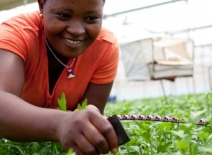
Living wage – the price of a decent cuppa?

4 April 2014
What would be a sufficient wage for Malawi’s tea pluckers to live on?

Living wage – it takes policy, pricing and participation

4 April 2014
Since wages are driven by multiple factors, ETI's Sabita Banerji focuses on the critical three that need to be tackled.

Pagination

  • Previous page ‹‹
  • Page 74
  • Next page ››

Get the latest

Subscribe to our email newsletters and stay up to speed on responsible business.
Subscribe

ETI elsewhere

  • Twitter
  • LinkedIn
  • YouTube

Footer

  • ETI Community
  • Accessibility
  • Contact
  • FAQ
  • Jobs at ETI
  • Press resources
  • Security & privacy
Other ETIs: Bangladesh, Denmark, Norway, Sweden
Ethical Trading Initiative | Registered No. 3578127