Get the latest
Subscribe to our email newsletters and stay up to speed on responsible business.

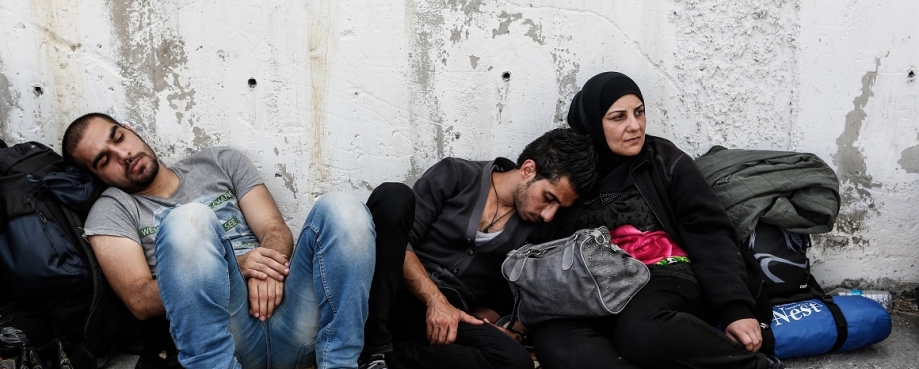
We have become used to thinking of the Syrian refugee issue as a “crisis”, not just in Turkey but across all European countries. This is particularly the case around integrating refugees into society and around labour market participation, reflects Dr Emre Eren Korkmaz.
The movement of refugees is inevitably viewed as a negative development.
And of course, people fleeing civil war, losing their loved ones and homes, leaving their country, and having to struggle with almost every daily issue cannot be disregarded.
However, refugee movements may also bring positive change to host countries. It is this that I want to address here.
When I talk about progressive, positive change, I do not mean the benefits this may bring to employers of informal workplaces, or so called sweatshops. Their approach to refugees is to use a lack of legal safeguards as an opportunity to exploit vulnerable people.
However, focusing on finding solutions to the daily problems faced by refugees could also bring progressive change for the local working population.
It is important to recognise that the mass movement of Syrian refugees into Turkey has made already endemic problems within Turkish industry more complex.
Turkey’s large informal sector and within it, child labour, didn’t begin with the influx of Syrian and Afghan refugees, or even Nigerian and Georgian migrants. Irregular and illegal working already existed.
Refugees and migrants, who need to work to survive, use their networks to find places in informal workshops within the sector.
Now, with problems of informality and child labour deepening, and beginning to attract more attention, we must grasp the opportunity that growing awareness presents. That means developing a comprehensive and holistic approach to addressing underlying problems.
Just granting work permits will not solve anything. Work permits need to be supported by the provision of courses to develop skills. In addition, language lessons should be offered and training given on legal rights and liberties.
But even these are not in themselves sufficient.
For many years, we’ve seen such projects conducted by the Turkish authorities, NGOs and other international organisations followed by the granting of work permits. But they have only ever led to limited progress.
The reason is simple. It is not possible to separate out individual aspects of industry-wide problems. We cannot solve the problems of refugees if we don’t discuss labour market participation as whole.
That would remain true even if Turkish authorities automatically granted work permits to all refugees as they enter the country.
In any case, it is just not possible to immediately mobilise refugees to work in factories as it is not consistent with international law nor with moral values. Refugees do not leave Syria to earn money. They have left because their country is consumed by civil war and they want to save their lives.
On arrival in Turkey, refugees are often traumatised and it is the government’s duty to welcome and support them, with the help of NGOs and local communities.
Following such a sudden and dramatic change to their lives, and with the current level of their industrial experience and language proficiency, as newcomers (even had they a work permit) they would still find only informal jobs – or formal jobs with the lowest wages and the worst conditions.
This is similar to Turkish citizens who migrate to metropolitan cities from rural areas, either to find a job or fleeing violence in their hometowns.
When a country has a large informal sector (as is the case in Turkey), and if there are no effective inspections, audits and legal enforcement practices, employers of informal workplaces will always find a labour force to exploit.
As granting work permits is not the solution, and with vocational and language training only providing limited progress, it is time to develop a holistic approach for all workers. Regardless of nationality.
That means focusing on the complete elimination of the informal sector. It would also save children and refugees from exploitation.
However, this requires two assurances:
The latter refers to the purchasing practices model that currently exists between brands and suppliers. See Martin Buttle’s blog Doing more to stop exploitation in Turkey's garment supply chains for a brief comment on purchasing practices.
Both greater government enforcement and changing business models are pre-requisites for change. They also need to be applied concomitantly, with workers, trade unions and related NGOs actively joining the process.
If this happens, then maybe, soon, we may witness a positive change.
And instead of talking about the tensions that exist between migrants and the local workforce, we may find that the labour market participation of Syrian refugees is accelerating solutions to the endemic problems inherent in Turkey’s garment industry.