Home

Main menu

  • About ETI
    • Our members
      • Public reporting performance
    • Who we are
      • ETI's origins
    • What we do
    • Global presence
    • Governance
    • Our team
      • ETI Board members
    • Our Strategy
  • Home
  • Why ETI
    • Why join ETI
  • ETI Base Code
    • Base Code overview
    • Base Code clause 1: Employment is freely chosen
    • Base Code clause 2: Freedom of association
    • Base Code clause 3: Working conditions are safe and hygienic
    • Base Code clause 4: Child labour shall not be used
    • Base Code clause 5: Living wages are paid
    • Base Code clause 6: Working hours are not excessive
    • Base Code clause 7: No discrimination is practiced
    • Base Code clause 8: Regular employment is provided
    • Base Code clause 9: No harsh or inhumane treatment is allowed
  • Our approach
    • Membership
    • Programmes
    • Transparency
    • Meaningful stakeholder engagement (MSE)
  • Our expertise
    • Climate change & Just transitions
    • Crisis response
    • Gender equity in supply chains
    • Worker representation
    • Forced labour & modern slavery
    • Responsible purchasing practices
      • RPP in manufacturing
    • Human rights due diligence
      • HRDD legislation tracker
  • Resources
    • Guidance & reports
    • Blog
      • Blog series: Extreme heat and risks to workers
      • Blog series: Tackling gender-based violence through GRACE
    • Issues
      • Human rights due diligence (HRDD): a complete guide for business
        • What is human rights due diligence?
        • Human rights due diligence legislation and regulatory requirements
        • How to implement human rights due diligence in your company
        • HRDD risk assessment for supply chains
        • Supplier engagement and human rights due diligence
      • Forced labour & modern slavery: a complete guide for business
        • What is modern slavery? Definitions, forms and scale
        • How to identify forced labour in your supply chain
        • Remediation: what to do when forced labour is found
        • Modern slavery legislation: what businesses need to know
        • EU Forced Labour Regulation: what it means for your business
        • How to write a modern slavery statement
        • High-risk sectors and sourcing regions for forced labour
        • Forced labour and migrant workers in supply chains
      • Responsible purchasing practices: what they are and why they matter
        • How to implement responsible purchasing practices
        • Responsible purchasing practices and legislation: what companies need to know
        • Responsible purchasing practices by sector
    • Case studies
    • Training
    • Events
      • ETI Insights series
    • Impact report 2024-25

Breadcrumb

  1. Home
  2. blog

Pride Month: LGBTQ+ rights at work

  • Share on Facebook
  • Share on Twitter
  • Share on LinkedIn
  • ETI
  • 21 June 2022
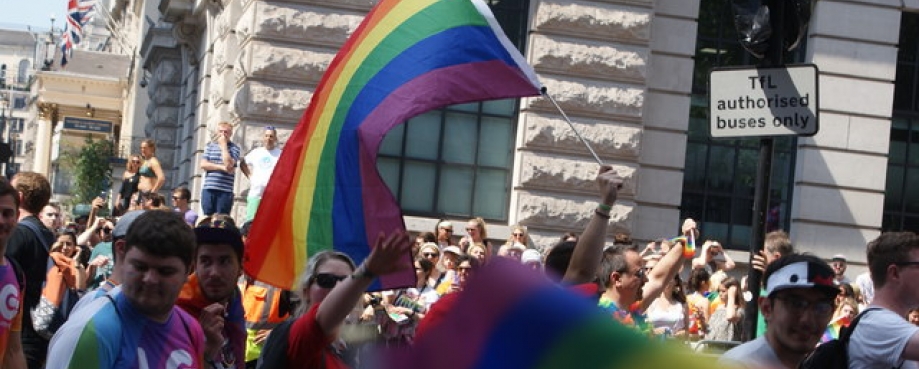
Photo credit: Robert Lamb.

June marks Pride Month in countries worldwide. Pride is a celebration of progress on Lesbian, Gay, Bisexual, Transgender and Queer (LGBTQ+) rights. It’s also an occasion to reflect on the change necessary to ensure everyone is treated equally and with respect, whatever their gender or sexuality.  

At ETI we recognise that LGBTQ+ people are among the most marginalised and often experience discrimination, exclusion and human rights violations in their daily lives. In many countries, LGBT+ people are still criminalised, sometimes facing imprisonment or even death. Even in countries with more progressive laws, they can still face regular discrimination. 

Our vision is a world where all workers are free from exploitation and discrimination, and enjoy conditions of freedom, security and equity. We work towards equal and fair treatment for all in the workplace, with a focus on the most vulnerable. Non-discrimination is a fundamental labour right, underlined by ETI Base Code clause 7:  

There is no discrimination in hiring, compensation, access to training, promotion, termination or retirement based on race, caste, national origin, religion, age, disability, gender, marital status, sexual orientation, union membership or political affiliation. 

This year Pride month has given us the opportunity to reflect on our work and what more we can do to advance LGBTQ+ rights in the workplace. We must acknowledge that in recent years our efforts to take action and advocate on these issues has been lacking. As we look ahead from Pride 2022, we will make some specific commitments and take action to bolster the global progress made to date, and ensure LGBTQ+ rights and freedoms roll forward, and not back.  

“Going forward, we want to increase our efforts working with our members to fight discrimination in the workplace and our approach to progressing gender equality to more explicitly include LGBTQ+ communities.”


Peter McAllister, ETI Executive Director 

At ETI, we stand in solidarity with LGBTQ+ workers worldwide. Our commitment today is to ensure our organisation and programmes reflect the diversity of the workers in global supply chains and to explore how else we can support LGBTQ+ workers to access their rights. 

ETI's blog covers issues at the intersection of business and human rights. We feature posts by, for and from our members and allies; we do not accept or offer payment for posts or publish content outside of these criteria. We welcome a range of insights and opinions from our guest bloggers, though don't necessarily agree with everything they say.

Stay up to date

Stay up to date with the latest from ETI via the following channels:
  • Email
  • Twitter
  • LinkedIn
  • Blog RSS

Get the latest

Subscribe to our email newsletters and stay up to speed on responsible business.

Subscribe

ETI elsewhere

  • Twitter
  • LinkedIn
  • YouTube

Footer

  • ETI Community
  • Accessibility
  • Contact
  • FAQ
  • Jobs at ETI
  • Press resources
  • Security & privacy
Other ETIs: Bangladesh, Denmark, Norway, Sweden
Ethical Trading Initiative | Registered No. 3578127