Home

Main menu

  • About ETI
    • Our members
      • Public reporting performance
    • Who we are
      • ETI's origins
    • What we do
    • Global presence
    • Governance
    • Our team
      • ETI Board members
    • Our Strategy
  • Home
  • Why ETI
    • Why join ETI
  • ETI Base Code
    • Base Code overview
    • Base Code clause 1: Employment is freely chosen
    • Base Code clause 2: Freedom of association
    • Base Code clause 3: Working conditions are safe and hygienic
    • Base Code clause 4: Child labour shall not be used
    • Base Code clause 5: Living wages are paid
    • Base Code clause 6: Working hours are not excessive
    • Base Code clause 7: No discrimination is practiced
    • Base Code clause 8: Regular employment is provided
    • Base Code clause 9: No harsh or inhumane treatment is allowed
  • Our approach
    • Membership
    • Programmes
    • Transparency
    • Meaningful stakeholder engagement (MSE)
  • Our expertise
    • Climate change & Just transitions
    • Crisis response
    • Gender equity in supply chains
    • Worker representation
    • Forced labour & modern slavery
    • Responsible purchasing practices
      • RPP in manufacturing
    • Human rights due diligence
      • HRDD legislation tracker
  • Resources
    • Guidance & reports
    • Blog
      • Blog series: Extreme heat and risks to workers
      • Blog series: Tackling gender-based violence through GRACE
    • Issues
      • Human rights due diligence (HRDD): a complete guide for business
        • What is human rights due diligence?
        • Human rights due diligence legislation and regulatory requirements
        • How to implement human rights due diligence in your company
        • HRDD risk assessment for supply chains
        • Supplier engagement and human rights due diligence
      • Forced labour & modern slavery: a complete guide for business
        • What is modern slavery? Definitions, forms and scale
        • How to identify forced labour in your supply chain
        • Remediation: what to do when forced labour is found
        • Modern slavery legislation: what businesses need to know
        • EU Forced Labour Regulation: what it means for your business
        • How to write a modern slavery statement
        • High-risk sectors and sourcing regions for forced labour
        • Forced labour and migrant workers in supply chains
      • Responsible purchasing practices: what they are and why they matter
        • How to implement responsible purchasing practices
        • Responsible purchasing practices and legislation: what companies need to know
        • Responsible purchasing practices by sector
    • Case studies
    • Training
    • Events
      • ETI Insights series
    • Impact report 2024-25

Breadcrumb

  1. Home
  2. blog

Protecting vulnerable fishers and seafood workers from COVID-19

  • Share on Facebook
  • Share on Twitter
  • Share on LinkedIn
  • Lindsay Wright - ETI
  • 5 May 2020

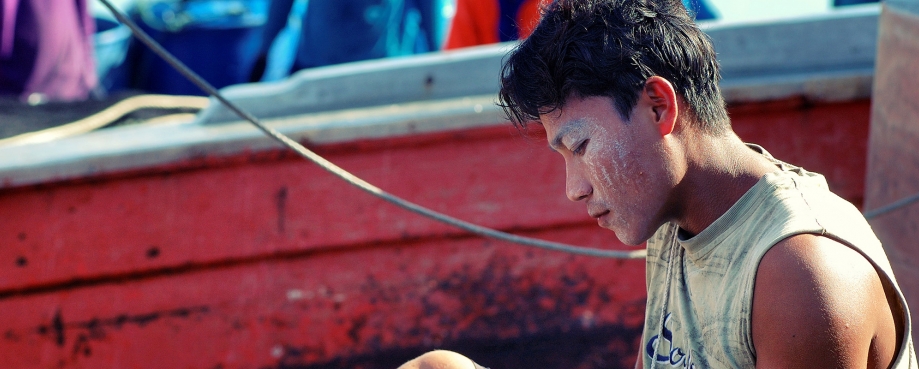
Covid-19: a guest blog from Dave Martin of the Sustainable Fisheries Partnership explaining how the organisation is using its network of more than 150 corporate partners and Supply Chain Roundtable (SR) participants to support workers in the seafood supply chain, from fishers and farmers to workers at the docks and in processing plants, and everyone in between.

This network of companies is already active in supporting fisheries and aquaculture improvements in over 40 countries.

In many areas of the world, fishing is an essential community activity that provides critical food and livelihoods. Across the globe, workers in the seafood industry have been declared “essential,” along with other workers in the food and agriculture sector. Therefore, our immediate concern is protecting peoples’ health. With this in mind, SFP recently launched a COVID-19 resource page that gathers publicly available resources focused on vessels and seafood.  

It is important to note that this is not SFP’s guidance—it is yours! We are gathering existing resources, including publications, reports, news stories, and other resource pages. Our goals are simple: 

  • Use our network to get information to the people and places that need it most
  • Gather and redistribute lessons learned (good and bad)
  • Make sure the businesses we work with are doing everything possible to protect workers and fishing communities.

We are particularly concerned about the plight of small-scale fishers and fishing communities.  They often lack basic supplies, are ill-equipped to access basic guidance being offered, and may lack the expertise or resources required to adapt best practices to small boats, beach landings and  local auctions.

Many of these fishers are unlicensed or unregistered, making them largely invisible and unable to access whatever relief programs may be or become available. They are losing markets and income as closures of restaurants globally has impacted demand for many products. And for many, this is a “perfect storm”—prices are down, their main fishing season is lost, there are few alternative species to catch, and they have no ability to access unemployment benefits and other assistance programs.

We are working with communities in Indonesia and Peru to address such challenges. And we commend the efforts of groups such as Blue Ventures, WorldFish, Too Big To Ignore, the Coalition for Fair Fisheries Arrangements, and others to support communities and share resources.

There are many parallels between ensuring a robust community response to COVID-19 and ensuring effective co-management of community fisheries and resources, and we hope to see communities, NGOs, businesses, and others working together to ensure both healthy communities and sustainable fisheries.

ETI's blog covers issues at the intersection of business and human rights. We feature posts by, for and from our members and allies; we do not accept or offer payment for posts or publish content outside of these criteria. We welcome a range of insights and opinions from our guest bloggers, though don't necessarily agree with everything they say.

Stay up to date

Stay up to date with the latest from ETI via the following channels:
  • Email
  • Twitter
  • LinkedIn
  • Blog RSS

Related content

  • Why migrant workers in Thailand and their defenders need support
  • Four ethical trade issues forcing their way onto the 2016 public agenda
  • Thailand’s improved human trafficking status: a springboard for change?
  • Thailand, a state on a journey: ending human rights abuses in fishing and farming
  • 10 year anniversary of Morecambe Bay tragedy
  • Safer waters: why the ILO's new aquaculture safety code matters for workers

Get the latest

Subscribe to our email newsletters and stay up to speed on responsible business.

Subscribe

ETI elsewhere

  • Twitter
  • LinkedIn
  • YouTube

Footer

  • ETI Community
  • Accessibility
  • Contact
  • FAQ
  • Jobs at ETI
  • Press resources
  • Security & privacy
Other ETIs: Bangladesh, Denmark, Norway, Sweden
Ethical Trading Initiative | Registered No. 3578127