Home

Main menu

  • About ETI
    • Our members
      • Public reporting performance
    • Who we are
      • ETI's origins
    • What we do
    • Global presence
    • Governance
    • Our team
      • ETI Board members
    • Our Strategy
  • Home
  • Why ETI
    • Why join ETI
  • ETI Base Code
    • Base Code overview
    • Base Code clause 1: Employment is freely chosen
    • Base Code clause 2: Freedom of association
    • Base Code clause 3: Working conditions are safe and hygienic
    • Base Code clause 4: Child labour shall not be used
    • Base Code clause 5: Living wages are paid
    • Base Code clause 6: Working hours are not excessive
    • Base Code clause 7: No discrimination is practiced
    • Base Code clause 8: Regular employment is provided
    • Base Code clause 9: No harsh or inhumane treatment is allowed
  • Our approach
    • Membership
    • Programmes
    • Transparency
    • Meaningful stakeholder engagement (MSE)
  • Our expertise
    • Climate change & Just transitions
    • Crisis response
    • Gender equity in supply chains
    • Worker representation
    • Forced labour & modern slavery
    • Responsible purchasing practices
      • RPP in manufacturing
    • Human rights due diligence
      • HRDD legislation tracker
  • Resources
    • Guidance & reports
    • Blog
      • Blog series: Extreme heat and risks to workers
      • Blog series: Tackling gender-based violence through GRACE
    • Issues
      • Human rights due diligence (HRDD): a complete guide for business
        • What is human rights due diligence?
        • Human rights due diligence legislation and regulatory requirements
        • How to implement human rights due diligence in your company
        • HRDD risk assessment for supply chains
        • Supplier engagement and human rights due diligence
      • Forced labour & modern slavery: a complete guide for business
        • What is modern slavery? Definitions, forms and scale
        • How to identify forced labour in your supply chain
        • Remediation: what to do when forced labour is found
        • Modern slavery legislation: what businesses need to know
        • EU Forced Labour Regulation: what it means for your business
        • How to write a modern slavery statement
        • High-risk sectors and sourcing regions for forced labour
        • Forced labour and migrant workers in supply chains
      • Responsible purchasing practices: what they are and why they matter
        • How to implement responsible purchasing practices
        • Responsible purchasing practices and legislation: what companies need to know
        • Responsible purchasing practices by sector
      • UK mandatory human rights due diligence: what businesses need to know
    • Case studies
    • Training
    • Events
      • ETI Insights series
    • Impact report 2024-25

Blog

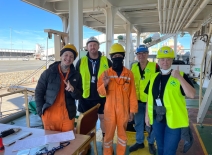
Seafarers pose for a photo with smiles and thumbs up. Photo credit: ITF.

What steps can businesses take to protect seafarers in their maritime supply chains?

28 September 2023
On World Maritime Day, TFG share steps they've taken to better protect workers in their maritime supply chains, with ITF's help.
Flower workers, Tanzania

ETI Impact report 2021-23

26 September 2023
A snapshot of our work and impact over two years, from April 2021 to March 2023.
Smiling, confident woman, with office colleagues in background

How firms can push for more women leaders in their supply chains – with the help of a new gender toolkit

18 September 2023
Key barriers for women seeking senior roles in supply chains, and a new resource to help counter them.
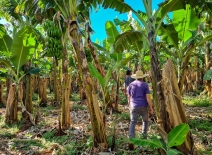
Two workers walk through a banana field. Photo credit: Shutterstock.

Blog series: Advancing living wages

12 September 2023
This blog series shares key highlights and learnings from companies, trade unions and NGOS, working towards the implementation of a living wage for workers.
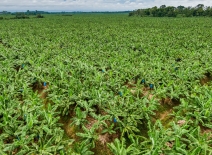
Beautiful aerial view of Banana plantations in Costa Rica on the road of Siquirres. Photo credit: Shutterstock.

Advancing living wages: Impossible without collective bargaining

12 September 2023
A former banana farm worker, Costa Rican trade union leader and COLSIBA coordinator writes on the absolute necessity of involving trade unions in living wage implementation processes for banana and other agro-industrial farm workers.
Destroyed building that collapsed from an earthquake. Photo credit: Shutterstock.

Morocco earthquake response

12 September 2023
ETI shares plans for its response and calls on international buyers to engage and support suppliers and workers affected by the disaster.
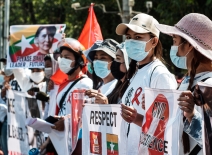
Photo credit: Wikimedia Commons/ MgHla (aka) Htin Linn Aye.

Blog series: Protecting workers in conflict-affected or high-risk areas

9 September 2023
Responding to the coup in Myanmar, invasion of Ukraine, and economic crisis in Sri Lanka.
A filed full of banana trees at trunk level. Photo credit: Shutterstock.

Advancing living wages: Why more innovative collaboration is critical

6 September 2023
ALDI SOUTH Group share lessons from their pilot on worker-led living wage verification in major banana production countries in Latin America.
Garment factory workers

ETI advocates for higher wages in RMG sector amidst Bangladesh’s wage negotiations

30 August 2023
ETI, together with amfori, Fair Labor Association,  Fair Wear, and Mondiaal FNV, has sent a letter to the Chairman of Bangladesh's Minimum Wage Board.
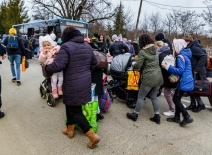
Ukranian refugees fleeing Russian invasion to neighbouring Slovakia

To protect displaced workers in humanitarian crises, businesses need to strengthen their human rights due diligence

17 August 2023
Guidance from Anti-Slavery International and La Strada International for businesses to support the recruitment and employment of people displaced by conflict and address modern slavery risk in value chains through heightened human rights due diligence. 
Aerial view of olive groves and cereal

Tackling exploitation of migrant workers in agriculture

28 July 2023
A new ETI programme aims to increase access to grievance mechanisms within agriculture supply chains and facilitate the sharing of information on emerging risks to migrant workers.

OECD logo signage

Why the revised 'OECD Guidelines on Responsible Business Conduct' matter

25 July 2023
New social, environmental, and technological challenges have emerged impacting business and societies.

Pagination

  • Previous page ‹‹
  • Page 16
  • Next page ››

Get the latest

Subscribe to our email newsletters and stay up to speed on responsible business.
Subscribe

ETI elsewhere

  • Twitter
  • LinkedIn
  • YouTube

Footer

  • ETI Community
  • Accessibility
  • Contact
  • FAQ
  • Jobs at ETI
  • Press resources
  • Security & privacy
Other ETIs: Bangladesh, Denmark, Norway, Sweden
Ethical Trading Initiative | Registered No. 3578127