Home

Main menu

  • About ETI
    • Our members
      • Public reporting performance
    • Who we are
      • ETI's origins
    • What we do
    • Global presence
    • Governance
    • Our team
      • ETI Board members
    • Our Strategy
  • Home
  • Why ETI
    • Why join ETI
  • ETI Base Code
    • Base Code overview
    • Base Code clause 1: Employment is freely chosen
    • Base Code clause 2: Freedom of association
    • Base Code clause 3: Working conditions are safe and hygienic
    • Base Code clause 4: Child labour shall not be used
    • Base Code clause 5: Living wages are paid
    • Base Code clause 6: Working hours are not excessive
    • Base Code clause 7: No discrimination is practiced
    • Base Code clause 8: Regular employment is provided
    • Base Code clause 9: No harsh or inhumane treatment is allowed
  • Our approach
    • Membership
    • Programmes
    • Transparency
    • Meaningful stakeholder engagement (MSE)
  • Our expertise
    • Climate change & Just transitions
    • Crisis response
    • Gender equity in supply chains
    • Worker representation
    • Forced labour & modern slavery
    • Responsible purchasing practices
      • RPP in manufacturing
    • Human rights due diligence
      • HRDD legislation tracker
  • Resources
    • Guidance & reports
    • Blog
      • Blog series: Extreme heat and risks to workers
      • Blog series: Tackling gender-based violence through GRACE
    • Issues
      • Human rights due diligence (HRDD): a complete guide for business
        • What is human rights due diligence?
        • Human rights due diligence legislation and regulatory requirements
        • How to implement human rights due diligence in your company
        • HRDD risk assessment for supply chains
        • Supplier engagement and human rights due diligence
      • Forced labour & modern slavery: a complete guide for business
        • What is modern slavery? Definitions, forms and scale
        • How to identify forced labour in your supply chain
        • Remediation: what to do when forced labour is found
        • Modern slavery legislation: what businesses need to know
        • EU Forced Labour Regulation: what it means for your business
        • How to write a modern slavery statement
        • High-risk sectors and sourcing regions for forced labour
        • Forced labour and migrant workers in supply chains
      • Responsible purchasing practices: what they are and why they matter
        • How to implement responsible purchasing practices
        • Responsible purchasing practices and legislation: what companies need to know
        • Responsible purchasing practices by sector
    • Case studies
    • Training
    • Events
      • ETI Insights series
    • Impact report 2024-25

Breadcrumb

  1. Home
  2. guidance and reports

Banana supply chain: How purchasing practices influence outcomes for producers, exporters, and workers

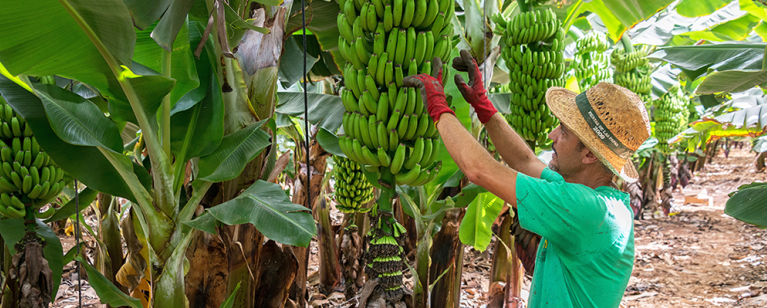
Male worker, checking bananas prior to harvest
  • Public
  • 15 September 2026
  • Tools, Guidelines & Briefings
Subject(s)
Bananas
Purchasing practices
Group report summary
Language(s)
English
The full group report
Language(s)
English
Group report summary
Language(s)
French
The full group report
Language(s)
French
Group report summary
Language(s)
Spanish
The full group report
Language(s)
Spanish

Until now, efforts to improve labour conditions in the banana sector have largely been focused on the production end of the chain. This has left one key area unexamined: the impact of retailer purchasing practices on workers. This report sets out to address this gap.  

The assessment draws on a variety of surveys and interviews with Tier 1 and Tier 2 suppliers and retailers. The research draws on a variety of surveys conducted across both Tier 1 and Tier 2 suppliers, as well as retailers’ buying teams, human rights teams, and where applicable, buying agencies. The research indentified where the experience of suppliers and retailers’ perceptions align, and where they diverge. It highlights the structural and operational factors that shape these differences and examines how specific purchasing practices create impacts across the supply chain and, ultimately, for workers.  

In addition to the findings, the report identifies gaps and establishes priority areas for making improvements. 

About this report

The work forms part of the wider efforts on living wages in the banana sector. This includes the German Retailers Working Group on Living Income and Living Wages coordinated by Deutsche Gesellschaft für Internationale Zusammenarbeit (GIZ)’s Sustainable Agricultural Supply Chains Initiative (SASI), and the national Banana Retail Commitment on Living Wages for banana supply chains in Belgium, the Netherlands, and the UK, coordinated by IDH.

Logos of IDH, GIZ & SASI

The assessment itself was completed in partnership with ETI and delivered through a collective process involving twelve retailers participating in the German, Belgian, Dutch and British retail banana commitments.

Logos of particpating brands: Aldi Nord, Aldi South, Rewe Group, Kaufland, Tesco, Sainsbury's, Co-op, Asda, Morrisons, Jumbo, Albert Heijn, Delhaize

Findings 

The assessment shows that retailers’ purchasing practices have a direct and significant influence on supply chain actors business and labour conditions. A clear pattern emerged: Retailers of ten expressed confidence in their practices, while suppliers described very different experiences. This divergence highlights where purchasing practices create pressure that cascades down to workers. 

The benchmarking also revealed variation between retailers, creating opportunities for peer learning and strengthening internal discussions on responsible purchasing. 
 
From the suppliers’ perspective, the assessments highlighted six key areas requiring further attention: 

  • Power imbalances and commercial pressure
  • Prices that do not sufficiently cover the real cost of production
  • Audit fatigue
  • Diverging technical specifications across markets
  • Pressure resulting from low retail prices and claims management practice
  • Challenges in implementing living wage commitments. 

These findings underline that purchasing decisions can have far-reaching consequences beyond commercial relationships, influencing suppliers’ ability to invest in better working conditions and wage improvements. 

A more detailed analysis of the findings can be found in the full report and summary, available in English, French and Spanish above. 

Related content

  • Common Framework for Responsible Purchasing Practices in Food
  • Elizabeth Warren’s Accountable Capitalism Act – will it benefit workers in the supply chain?
  • OECD 2018 Forum on human rights due diligence in the garment and footwear sector
  • SURVEY: Inviting suppliers to help buyers improve their purchasing practices
  • Fairtrade: celebrating the first 20 years. What’s next?
  • Our response to the GMB Union's call for multinational fruit company Fyffes to be expelled from ETI

Get the latest

Subscribe to our email newsletters and stay up to speed on responsible business.

Subscribe

ETI elsewhere

  • Twitter
  • LinkedIn
  • YouTube

Footer

  • ETI Community
  • Accessibility
  • Contact
  • FAQ
  • Jobs at ETI
  • Press resources
  • Security & privacy
Other ETIs: Bangladesh, Denmark, Norway, Sweden
Ethical Trading Initiative | Registered No. 3578127