Get the latest
Subscribe to our email newsletters and stay up to speed on responsible business.

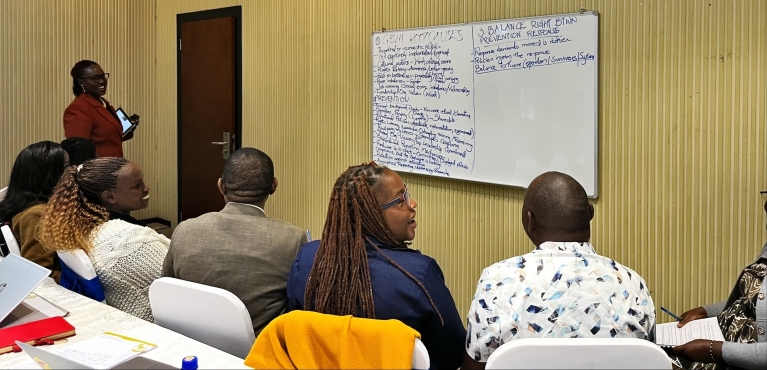
Equal Treatment of Workers programme
Preventing GBVH requires a strong culture of fairness, equality and zero tolerance in the workplace. Case study on ETI's Equal Treatment of Workers programme
The Dindigul Agreement
Safeguarding human rights and preventing GBVH across the supply chain requires cooperation among all relevant actors. Following the alleged rape and murder of a 20-year-old Dalit worker, Jeyasre Kathiravel, in South India, the Dindigul Agreement was signed in 2022.
SIKIKA
Grievance mechanisms are central to addressing GBVH. All reports must be taken seriously and treated as if they have occurred. Case study on Kakuzi’s OGM, known as SIKIKA.
A Private Sector Approach for Addressing Sexual Exploitation, Abuse and Harassment (SEAH)
Businesses are accountable for GBVH and learn from GBVH risks and reports.
WFK Survivor guidance
The Wangu Kanja Foundation (WKF) recognised the gap in capacity employers may have in safeguarding and drafted written guidance and a training to fill this.
Producer case study: A farming production business faced several allegations of human rights abuses including bribery, coercion, loan sharking and GBVH by employees in and around the workplace.
UN Guiding Principles on Business and Human Rights
OECD Guidelines for Responsible Business Conduct
ILO Tripartite Declaration of Principles concerning Multinational Enterprises and Social Policy
ILO Convention 190 and Recommendation 206
Comprehensive guidance on how companies can address gender-based violence: Addressing Gender-Based Violence and Harassment Emerging Good Practice for the Private Sector from International Finance Corporation, the European Bank for Reconstruction and Development and CDC Group
Additional guidance on changing organisational culture, including bystander accountability: What will it take? Promoting cultural change to end sexual harassment
Violence and Harassment in the World of Work, Train the Trainers Toolkit on the ILO Violence and Harassment Convention (No. 190) and Recommendation (No. 206): https://www.iuf.org/wp-content/uploads/2021/06/2021-Violence-and-Harassment-in-the-World-of-Work-Facilitator-Guide.pdf and https://www.iuf.org/wp-content/uploads/2021/06/2021-Violence-and-Harassment-in-the-World-of-Work-Activity-Workbook.pdf
ACT EMP (ILO employers association) guide for employers: https://www.ilo.org/publications/violence-and-harassment-work-practical-guide-employers
Background on GBVH in commercial agricultural supply chains - Spotlight on sexual violence and harassment in commercial agriculture: Lower and middle income countries
Creating safe spaces for women to organise and access their rights
ETI Safe Spaces
ILO Adopted Conclusions for the Meeting of experts on wage policies, including living wages
ILO Policy guidelines for the promotion of decent work in the agri-food sector
Responsible Purchasing Practices (RPP) resource hub
Common Framework for Responsible Purchasing Practices in Food
ILO - Inclusion of LGBTI+ persons in the workplace
ISAC Definition & Principles of a Victim/Victim/survivor Centered Approach
UN Women - What will it take promoting cultural change to end sexual harasssment
UNGP 31 Effectiveness criteria – Summary of ARP III Guidance
Access to Remedy in Cases of Business-Related Human Rights Abuses: A practice guide for non-state-based grievance mechanisms (Full Guidance)
ETI Recommendations for effective operational grievance mechanisms
ETI Access to remedy: Practical Guidance For Companies
© Ethical Trading Initiative. All rights reserved. Content may not be reproduced without prior permission of ETI. Contact eti@eti.org.uk.