Home

Main menu

  • Home
  • Why ETI
    • Why join ETI
  • ETI Base Code
    • Base Code overview
    • Base Code clause 1: Employment is freely chosen
    • Base Code clause 2: Freedom of association
    • Base Code clause 3: Working conditions are safe and hygienic
    • Base Code clause 4: Child labour shall not be used
    • Base Code clause 5: Living wages are paid
    • Base Code clause 6: Working hours are not excessive
    • Base Code clause 7: No discrimination is practiced
    • Base Code clause 8: Regular employment is provided
    • Base Code clause 9: No harsh or inhumane treatment is allowed
  • Our approach
    • Membership
    • Programmes
    • Transparency
    • Meaningful stakeholder engagement (MSE)
  • Our expertise
    • Climate change & Just transitions
    • Crisis response
    • Gender equality in supply chains
    • Worker representation
    • Forced labour & modern slavery
    • Responsible purchasing practices
      • RPP in manufacturing
    • Human rights due diligence
      • HRDD legislation tracker
  • Resources
    • Guidance & reports
    • Blog
      • Blog series: Tackling gender-based violence through GRACE
    • Case studies
    • Training
    • Events
      • ETI Insights series
    • Impact report 2024-25
  • About ETI
    • Who we are
      • ETI's origins
    • What we do
    • Our members
      • Public reporting performance
    • Global presence
    • Governance
    • Our team
      • ETI Board members

Resources

Fishing, Russia

GAIA principles, FAQs

  • Public
  • 10 December 2025
  • Tools, Guidelines & Briefings
FAQs to accompany the GAIA Principles to end gender-based violence and harassment in commercial agriculture and fisheries
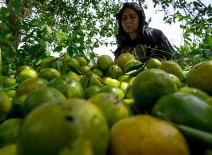
Woman harvesting citrus fruits

GAIA principles: Overview

  • Public
  • 10 December 2025
  • Tools, Guidelines & Briefings
Overview of principles to end gender-based violence and harassment in commercial agriculture and fisheries
Woman harvesting citrus fruits

ETI insights: Addressing GBVH in commercial agriculture and fisheries

  • Public
  • 26 November 2025
  • Tools, Guidelines & Briefings
Resources from the launch of the the GAIA Principles to address GBVH in commercial agriculture and fisheries.
Harvesting bananas

GAIA principles to end GBVH in agriculture and fisheries

  • Public
  • 25 November 2025
  • Tools, Guidelines & Briefings
Principles to end gender-based violence and harassment in commercial agriculture and fisheries.

Grievance mechanisms in agriculture - Lessons and practical insights

  • Public
  • 18 November 2025
  • Tools, Guidelines & Briefings
This document reveals what it takes to build grievance systems that migrant agricultural workers actually trust and use, drawing on real-world pilots, research, and cross-border collaboration. It offers practical insights for organisations seeking to improve working conditions and reduce labour exploitation across agricultural supply chains.

Joint statement on the government response to the JCHR Report on Forced Labour in UK Supply Chains

  • Public
  • 23 October 2025
  • ETI position statement
Joint statement by the Ethical Trading Initiative (ETI), British Retail Consortium (BRC), Corporate Justice Coalition (CJC), and Trades Union Congress (TUC).
Leather worker, Bangladesh

From Pollution to Progress

  • Public
  • 13 October 2025
  • Tools, Guidelines & Briefings
Lessons from the SMEP Programme in the Savar Tannery Industrial Estate, Bangladesh

ETI Accounts 2024

  • Public
  • 8 October 2025
  • ETI annual reviews & accounts
ETI audited accounts, 2024-25

Exploring the socio-economic impact of the living wage gap - case studies from Bangladesh, India & Pakistan

  • Public
  • 8 October 2025
  • Tools, Guidelines & Briefings
Explores the socio-economic impact of the wage gap between the calculated living wage
and the current wage of ready-made garment (RMG) sector workers from Bangladesh, India and
Pakistan.

Joint statement on EU Due Diligence Framework

  • Public
  • 25 September 2025
  • ETI position statement
As the European Parliament resumes its legislative work to define its own position on the EU Omnibus 1 Package, and ahead of the upcoming trilogue negotiations, our organisations — amfori, Cascale, the Ethical Trading Initiative (ETI), Ethical Trade Norway, Ethical Trade Sweden, Fair Labor Association, Fair Wear Foundation, Green Button, and the Social & Labor Convergence Program (SLCP) — reaffirm our collective commitment to advancing responsible business conduct in global supply chains.
Leather work

Getting Started on Leather Due Diligence: A good practice guide for brands and retailers

  • Public
  • 22 September 2025
  • Tools, Guidelines & Briefings
Helps organisations map risks, define actions, and align with evolving human rights expectations across the leather supply chain. Offers practical steps for embedding due diligence into your operations.

ETI Accounts 2023

  • Public
  • 16 September 2025
  • ETI annual reviews & accounts
ETI audited accounts, 2023-24

Pagination

  • Previous page ‹‹
  • Page 5
  • Next page ››

Get the latest

Subscribe to our email newsletters and stay up to speed on responsible business.

Subscribe

ETI elsewhere

  • Twitter
  • LinkedIn
  • YouTube

Footer

  • ETI Community
  • Accessibility
  • Contact
  • FAQ
  • Jobs at ETI
  • Press resources
  • Security & privacy
Other ETIs: Bangladesh, Denmark, Norway, Sweden
Ethical Trading Initiative | Registered No. 3578127