Home

Main menu

  • About ETI
    • Our members
      • Public reporting performance
    • Who we are
      • ETI's origins
    • What we do
    • Global presence
    • Governance
    • Our team
      • ETI Board members
    • Our Strategy
  • Home
  • Why ETI
    • Why join ETI
  • ETI Base Code
    • Base Code overview
    • Base Code clause 1: Employment is freely chosen
    • Base Code clause 2: Freedom of association
    • Base Code clause 3: Working conditions are safe and hygienic
    • Base Code clause 4: Child labour shall not be used
    • Base Code clause 5: Living wages are paid
    • Base Code clause 6: Working hours are not excessive
    • Base Code clause 7: No discrimination is practiced
    • Base Code clause 8: Regular employment is provided
    • Base Code clause 9: No harsh or inhumane treatment is allowed
  • Our approach
    • Membership
    • Programmes
    • Transparency
    • Meaningful stakeholder engagement (MSE)
  • Our expertise
    • Climate change & Just transitions
    • Crisis response
    • Gender equity in supply chains
    • Worker representation
    • Forced labour & modern slavery
    • Responsible purchasing practices
      • RPP in manufacturing
    • Human rights due diligence
      • HRDD legislation tracker
  • Resources
    • Guidance & reports
    • Blog
      • Blog series: Extreme heat and risks to workers
      • Blog series: Tackling gender-based violence through GRACE
    • Issues
      • Human rights due diligence (HRDD): a complete guide for business
        • What is human rights due diligence?
        • Human rights due diligence legislation and regulatory requirements
        • How to implement human rights due diligence in your company
        • HRDD risk assessment for supply chains
        • Supplier engagement and human rights due diligence
      • Forced labour & modern slavery: a complete guide for business
        • What is modern slavery? Definitions, forms and scale
        • How to identify forced labour in your supply chain
        • Remediation: what to do when forced labour is found
        • Modern slavery legislation: what businesses need to know
        • EU Forced Labour Regulation: what it means for your business
        • How to write a modern slavery statement
        • High-risk sectors and sourcing regions for forced labour
        • Forced labour and migrant workers in supply chains
      • Responsible purchasing practices: what they are and why they matter
        • How to implement responsible purchasing practices
        • Responsible purchasing practices and legislation: what companies need to know
        • Responsible purchasing practices by sector
    • Case studies
    • Training
    • Events
      • ETI Insights series
    • Impact report 2024-25

Breadcrumb

  1. Home
  2. blog

Business and civil society call on UK Prime Minister for mHREDD law

  • Share on Facebook
  • Share on Twitter
  • Share on LinkedIn
  • ETI
  • 21 October 2026
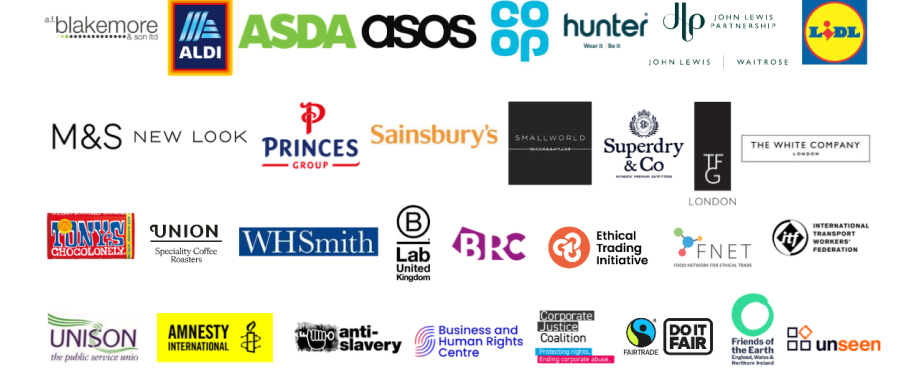
All 33 signatories logos

Today, people from across the UK are in Westminster for the Good Business Matters mass lobby, meeting their MPs to call for a law that holds businesses to account for harm to people and the planet. To coincide with the lobby, ETI and the Corporate Justice Coalition have coordinated an open letter to the Prime Minister, adding the voice of business, trade unions and civil society to theirs.

What the letter asks for

The signatories are calling for one clear UK standard, grounded in the UN Guiding Principles on Business and Human Rights and the OECD Guidelines. They want mHREDD legislation that:

  • holds all UK businesses legally accountable for failing to take reasonable steps to prevent harm across their operations and value chains
  • covers all human rights, labour rights and environmental harms
  • applies to public and private sector organisations alike, in proportion to their size, influence and leverage
  • provides access to justice and remedy for people who are harmed
  • keeps pace with due diligence laws internationally, so UK business stays competitive

The letter is backed by businesses with a combined turnover of over £130 billion, including seven of the UK's major supermarkets and well-known high street names. They are joined by the British Retail Consortium, B Lab UK, trade unions including UNISON and the International Transport Workers' Federation, and civil society organisations including Amnesty International UK, Anti-Slavery International, Fairtrade Foundation and Friends of the Earth.

Why now

Voluntary approaches have had decades to work, and the evidence shows they are not enough on their own. Government figures show 40% of businesses fail to meet basic reporting requirements under Section 54 of the Modern Slavery Act, without consequence. New Fabian Society research puts the cost of serious labour exploitation and environmental harm in the UK at around £4.4 billion a year, while a regime to prevent it would cost around £420 million a year: less than a tenth of the cost of the harm.

The public agrees. YouGov polling for Friends of the Earth found that just 8% of UK adults think voluntary agreements are enough to prevent human rights harms by UK businesses, while 74% want businesses operating globally to be legally required to prevent them.

"For almost 30 years, ETI has brought companies, trade unions and NGOs together to improve conditions for workers in global supply chains. We know good practice can't rest on goodwill alone. Our members across all three groups have agreed what effective legislation should look like, so the debate is no longer about whether to legislate, but how. We urge the government to commit to a proportionate law that holds companies accountable for preventing harm to workers and gives those harmed a route to remedy. We stand ready to help design it."

Giles Bolton, Executive Director, Ethical Trading Initiative

What happens next

Three parliamentary committees have already recommended mHREDD legislation, and the Government has gathered further evidence through BIST's review of Responsible Business Conduct and the FCDO's National Baseline Assessment. The letter urges the Government to publish both without delay and act on what they find. The signatories have offered to meet the Prime Minister or his officials in the coming weeks to discuss how a law can be designed, through meaningful consultation, to work for rightsholders and for business.

Read the full letter and see all 33 signatories

File(s)

Open letter to the UK Prime Minister: Organisations across business, trade unions and civil society call for mHREDD legislation

All 33 signatories logos
Leading businesses, trade unions and civil society organisations call on the Prime Minister to commit to mandatory human rights and environmental due diligence legislation this session.
Read more
ETI's blog covers issues at the intersection of business and human rights. We feature posts by, for and from our members and allies; we do not accept or offer payment for posts or publish content outside of these criteria. We welcome a range of insights and opinions from our guest bloggers, though don't necessarily agree with everything they say.

Stay up to date

Stay up to date with the latest from ETI via the following channels:
  • Email
  • Twitter
  • LinkedIn
  • Blog RSS

Get the latest

Subscribe to our email newsletters and stay up to speed on responsible business.
Subscribe

ETI elsewhere

  • Twitter
  • LinkedIn
  • YouTube

Footer

  • ETI Community
  • Accessibility
  • Contact
  • FAQ
  • Jobs at ETI
  • Press resources
  • Security & privacy
Other ETIs: Bangladesh, Denmark, Norway, Sweden
Ethical Trading Initiative | Registered No. 3578127