Get the latest
Subscribe to our email newsletters and stay up to speed on responsible business.

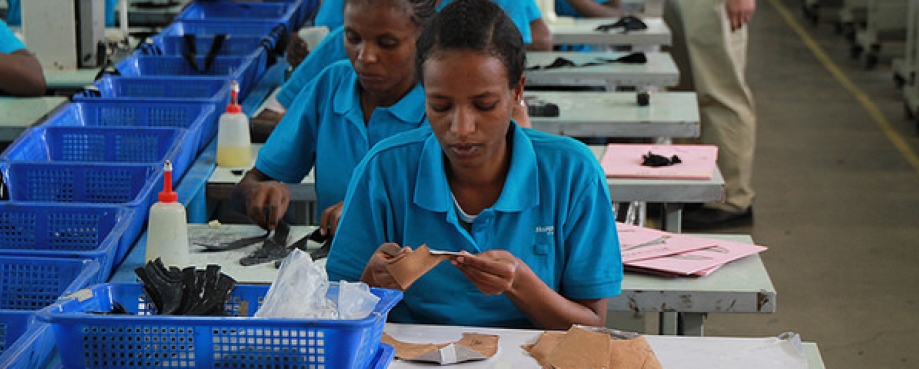
What are your first thoughts when imaging Ethiopia (if you have never visited before). For me the memory of the 1984 drought and famine was front of mind followed by dreams of experiencing the sunken churches of Lalibela. It certainly had not, previous to the last few years, been somewhere I had imagined a burgeoning garment industry. Yet as you fly in over the outskirts of Addis you can see bright, sparkly industrial parks - each shed identical to the last and shiny new roads and railways – a sign of what was waiting on the ground.
In 7 days in Addis Ababa, I managed to see a vast array of factories – from some that were old and empty, to those owned by Ethiopian entrepreneurs wanting to expand internationally to the foreign owned giants where, once inside the front door, you could be in any unit in the world.
Recently I was asked by ETI, in my role as CEO and Co Founder of Ethical Apparel Africa, to speak for 10 minutes on the opportunity in Ethiopia and particularly about worker’s rights and freedom of association, so, having lived in Bangladesh, I was keen to understand the difference between factories claiming to allow things like collective bargaining and seeing it actually democratically working. Meeting with the Union Federation was quite refreshing – their approach is to have unions created by factories, thus removing the chance of having local unions pressurising workers to join their union over other peoples - but also meaning that 60% of the workers' union fees stayed in the factory, managed by the in-factory union for their own workers.
So a great base to work from, and without a minimum wage it means collective bargaining does have an impact but wages also vary enormously. However they have some way to go to compete on price, not least because the efficiency and pace of production is significantly slower than Asia. I am passionate that it is possible to develop factories that can compete on price and quality through greater efficiency and investment of savings into worker benefits that support them, create loyalty and help to make great places to work.
With time and input learnt from other manufacturing countries, efficiencies could improve and technical skills be expanded. Ethiopia’s greatest risk to growth is not in the perception that Africans are not as dexterous as Asians, or even in its reputation of corruption, but in its lack of sophistication and availability within logistics and raw materials, both from a lead-time and cost perspective. Despite government efforts and support in building railways and offering tax breaks for investments and imports, manufacturers still have to largely ship raw materials in and allow for double the cost of shipping out, due to being a landlocked country. All this leads to goods not being as cheap as international buyers are expecting.
The future, as I shared with ETI members, lies in being able to have experienced people on the ground working alongside the factories to develop their ethical, technical and efficiency potential, plus starting with the right product that is not lead-time dependent (due to shipping fabric in).
I have long held a lot of respect for everything ETI has achieved in moving the garment manufacturing industry forward both in brands' responsibility and consumer minds, so felt very privileged to be able to speak at one of their breakfasts. The attendees were a great mix of brands, suppliers and organisations focused on workers rights. Fuelled by some very yummy pastries, sharing insights about Ethiopia’s risks and opportunities further served to deepen my passion for Africa and the role the continent can play in the garment manufacturing industry. ETI members were interested and intrigued to learn more and the discussion afterwards was lively and interactive.
In conclusion I encourage anyone thinking of visiting Ethiopia and indeed other African countries that are less well trod to go for it, though perhaps avoiding the rainy season! For business it has some way to go, but get in early and you will be rewarded with loyalty and the opportunity to ensure we build an industry not just governed by foreign investment, but built with ethics in mind to benefit workers, suppliers and retailers – so it doesn’t become another Bangladesh.
What is stopping you from sourcing from Africa?
Keren spoke at an event in ETI's Ethical Insights series.