Home

Main menu

  • About ETI
    • Our members
      • Public reporting performance
    • Who we are
      • ETI's origins
    • What we do
    • Global presence
    • Governance
    • Our team
      • ETI Board members
    • Our Strategy
  • Home
  • Why ETI
    • Why join ETI
  • ETI Base Code
    • Base Code overview
    • Base Code clause 1: Employment is freely chosen
    • Base Code clause 2: Freedom of association
    • Base Code clause 3: Working conditions are safe and hygienic
    • Base Code clause 4: Child labour shall not be used
    • Base Code clause 5: Living wages are paid
    • Base Code clause 6: Working hours are not excessive
    • Base Code clause 7: No discrimination is practiced
    • Base Code clause 8: Regular employment is provided
    • Base Code clause 9: No harsh or inhumane treatment is allowed
  • Our approach
    • Membership
    • Programmes
    • Transparency
    • Meaningful stakeholder engagement (MSE)
  • Our expertise
    • Climate change & Just transitions
    • Crisis response
    • Gender equity in supply chains
    • Worker representation
    • Forced labour & modern slavery
    • Responsible purchasing practices
      • RPP in manufacturing
    • Human rights due diligence
      • HRDD legislation tracker
  • Resources
    • Guidance & reports
    • Blog
      • Blog series: Extreme heat and risks to workers
      • Blog series: Tackling gender-based violence through GRACE
    • Issues
      • Human rights due diligence (HRDD): a complete guide for business
        • What is human rights due diligence?
        • Human rights due diligence legislation and regulatory requirements
        • How to implement human rights due diligence in your company
        • HRDD risk assessment for supply chains
        • Supplier engagement and human rights due diligence
      • Forced labour & modern slavery: a complete guide for business
        • What is modern slavery? Definitions, forms and scale
        • How to identify forced labour in your supply chain
        • Remediation: what to do when forced labour is found
        • Modern slavery legislation: what businesses need to know
        • EU Forced Labour Regulation: what it means for your business
        • How to write a modern slavery statement
        • High-risk sectors and sourcing regions for forced labour
        • Forced labour and migrant workers in supply chains
      • Responsible purchasing practices: what they are and why they matter
        • How to implement responsible purchasing practices
        • Responsible purchasing practices and legislation: what companies need to know
        • Responsible purchasing practices by sector
      • UK mandatory human rights due diligence: what businesses need to know
    • Case studies
    • Training
    • Events
      • ETI Insights series
    • Impact report 2024-25

Blog

Birdnest graduates to full ETI Membership

23 February 2022
Emilie White, Head of Production at Birdsnest reflects on their ETI journey so far, marking the company's graduation to full ETI Membership.
Adolescent Dalit girl, India

Caste is a salient risk for business – here’s why

18 February 2022
Meena Varma, Executive Director of IDSN, explains why caste is a salient risk for business worldwide.

A chain is only as strong as its weakest link: Why EU mandatory due diligence legislation must include homeworkers

18 February 2022
Join Homeworkers Worldwide for apanel discussion that makes the case for homeworkers to be included in EU legislation and corporate due diligence.

A creative business built on ‘the human factor’: New member ORB X

15 February 2022
Scott Berman, Co-Founder & Managing Director of ORB X reflects on joining the ETI membership.
Gender picture

Gender Equity in Supply Chains: Future proofing

11 February 2022
Caroline Downey, Lucy Brill and Holly Woodward Davey reflect on the gender gains made so far, the reality of gender equity efforts today and the steps needed to progress going forward.

The Industry We Want Launches Drivers for Change

10 February 2022
New dashboard measures garment and footwear industry’s progress on the wage gap, purchasing practices and GHG emissions
Cambodia Garments

Gender and Casualisation: the elephant in the room

8 February 2022
Homeworkers Worldwide's Lucy Brill details the risks women workers' face in the casualisation of work across global fashion supply chains, and share HWW's recommendations for redress.
India 2009 Homeworker

Putting homeworking on the Gender Agenda

3 February 2022
Homeworkers Worldwide's Lucy Brill emphasises the need for homeworking on the Gender Agenda if supply chains are to progress towards gender equity.
Male and female participants in a gender learning session, VP Flower Farm, Kenya

Gender Equity in Supply Chains: Education

1 February 2022
Women Working Worldwide's Caroline Downey continues our Gender Equality in Supply Chains series with examples of how different forms of education have and can drive progress towards gender equity.
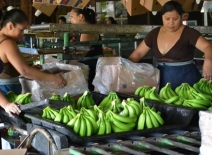
Women workers sort bananas into boxes.

Gender Equity in Supply Chains: Representation

27 January 2022
Banana Link's Holly Woodward Davey continues our Gender Equality in Supply Chains series with examples of how women's representation within the banana industry has and can drive progress towards gender equity.
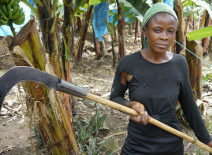
Women worker holds banana harvesting sickle.

Gender Equity in Supply Chains: An enabling environment

25 January 2022
Banana Link's Holly Woodward Davey continues our Gender Equality in Supply Chains series with examples of how facilitating an enabling environment within the banana industry has and can drive progress towards gender equity.

ETI responds to alleged exploitation of migrant workers in Odemira, Portugal

25 January 2022
ETI responds to alleged exploitation of migrant workers in Odemira, Portugal

Pagination

  • Previous page ‹‹
  • Page 23
  • Next page ››

Get the latest

Subscribe to our email newsletters and stay up to speed on responsible business.
Subscribe

ETI elsewhere

  • Twitter
  • LinkedIn
  • YouTube

Footer

  • ETI Community
  • Accessibility
  • Contact
  • FAQ
  • Jobs at ETI
  • Press resources
  • Security & privacy
Other ETIs: Bangladesh, Denmark, Norway, Sweden
Ethical Trading Initiative | Registered No. 3578127