Home

Main menu

  • About ETI
    • Our members
      • Public reporting performance
    • Who we are
      • ETI's origins
    • What we do
    • Global presence
    • Governance
    • Our team
      • ETI Board members
    • Our Strategy
  • Home
  • Why ETI
    • Why join ETI
  • ETI Base Code
    • Base Code overview
    • Base Code clause 1: Employment is freely chosen
    • Base Code clause 2: Freedom of association
    • Base Code clause 3: Working conditions are safe and hygienic
    • Base Code clause 4: Child labour shall not be used
    • Base Code clause 5: Living wages are paid
    • Base Code clause 6: Working hours are not excessive
    • Base Code clause 7: No discrimination is practiced
    • Base Code clause 8: Regular employment is provided
    • Base Code clause 9: No harsh or inhumane treatment is allowed
  • Our approach
    • Membership
    • Programmes
    • Transparency
    • Meaningful stakeholder engagement (MSE)
  • Our expertise
    • Climate change & Just transitions
    • Crisis response
    • Gender equity in supply chains
    • Worker representation
    • Forced labour & modern slavery
    • Responsible purchasing practices
      • RPP in manufacturing
    • Human rights due diligence
      • HRDD legislation tracker
  • Resources
    • Guidance & reports
    • Blog
      • Blog series: Extreme heat and risks to workers
      • Blog series: Tackling gender-based violence through GRACE
    • Issues
      • Human rights due diligence (HRDD): a complete guide for business
        • What is human rights due diligence?
        • Human rights due diligence legislation and regulatory requirements
        • How to implement human rights due diligence in your company
        • HRDD risk assessment for supply chains
        • Supplier engagement and human rights due diligence
      • Forced labour & modern slavery: a complete guide for business
        • What is modern slavery? Definitions, forms and scale
        • How to identify forced labour in your supply chain
        • Remediation: what to do when forced labour is found
        • Modern slavery legislation: what businesses need to know
        • EU Forced Labour Regulation: what it means for your business
        • How to write a modern slavery statement
        • High-risk sectors and sourcing regions for forced labour
        • Forced labour and migrant workers in supply chains
      • Responsible purchasing practices: what they are and why they matter
        • How to implement responsible purchasing practices
        • Responsible purchasing practices and legislation: what companies need to know
        • Responsible purchasing practices by sector
    • Case studies
    • Training
    • Events
      • ETI Insights series
    • Impact report 2024-25

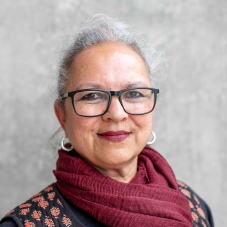
Sabita Banerji

Sabita Banerji
Position
NGO Co-ordinator
Organisation
THIRST

Sabita is NGO Coordinator and CEO of tea sctor NGO, THIRST


Blog posts from this author

Tabitha's story

4 May 2014
"I didn't know about my rights before the training," Tabitha says, "but since that day I know my rights”.

Living wage – it takes policy, pricing and participation

4 April 2014
Since wages are driven by multiple factors, ETI's Sabita Banerji focuses on the critical three that need to be tackled.
Workshop participants discuss their plans

Living wage: an appetite for action...together

27 January 2014
A clear message emerging from the recent ETI Members Living Wage Workshop was the need - and determination - to move beyond discussion and take practical, collaborative action.
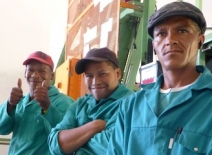
Male farm workers, South Africa

Respecting Mandela's legacy for South Africa's agricultural workers

7 December 2013
Can South Africa continue to live by the principles of dignity, respect and tolerance that Mandela espoused? ETI diversity training on farms helps embed these values among workers.
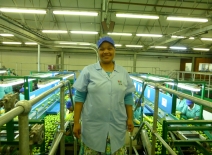
Female fruit packing house supervisor, South Africa

Training their way towards equal treatment on the Western Cape

21 November 2013
Training workers, supervisors and managers on equal treatment improves morale, communications and productivity. ETI's Sabita Banerji reports from Stellenbosch.
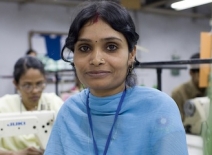
Female garment worker on a factory sewing floor, India

Living Wage – continuing the journey

8 November 2013
As Living Wage Week comes to an end, the work to try to achieve it for workers in the UK and around the world continues.

Pagination

  • Previous page ‹‹
  • Page 6
  • Next page ››

Stay up to date

Stay up to date with the latest from ETI via the following channels:
  • Email
  • Twitter
  • LinkedIn
  • Blog RSS

Get the latest

Subscribe to our email newsletters and stay up to speed on responsible business.

Subscribe

ETI elsewhere

  • Twitter
  • LinkedIn
  • YouTube

Footer

  • ETI Community
  • Accessibility
  • Contact
  • FAQ
  • Jobs at ETI
  • Press resources
  • Security & privacy
Other ETIs: Bangladesh, Denmark, Norway, Sweden
Ethical Trading Initiative | Registered No. 3578127