Get the latest
Subscribe to our email newsletters and stay up to speed on responsible business.

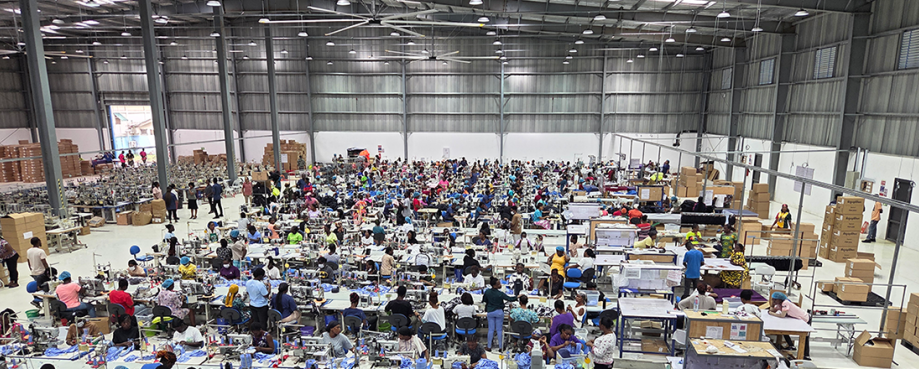
As global temperatures rise, heat is a growing risk to workers in supply chains. The approach used at the Maagrace apparel factory shows what a practical, worker-centred response can look like – and how little it can cost. It offers a powerful good practice example that can be adapted and used in other indoor manufacturing workplaces.
Ethical Apparel Africa’s Maagrace factory employs over 1,000 workers, more than 70% of them women, making garments for major global brands. Maagrace is located in eastern Ghana where the climate is hot and humid throughout the year. However, climate change is leading to higher temperatures – which now approach 40 degrees Celsius during the hottest months. In response, EAA has worked closely with worker representatives and specialists to design and implement a worker-centred heat risk management system. The system has five key components:
Ghanaian law sets no maximum workplace temperature, so EAA’s first step was to understand conditions across the factory. It couldn’t assume temperatures were the same in every department, from cutting, sewing and pressing, to packing and warehousing, so it installed temperature and humidity sensors in all areas. The sensors track this data continuously, 24/7; the factory’s compliance team reviews the records every morning and afternoon. Having an accurate picture of temperatures across all departments at the factory is essential for the design and implementation of effective risk mitigation actions.
To this end, EAA also recognised the value of a more sophisticated measure. It uses a ‘wet-bulb globe temperature’ (WBGT) spot meter in key locations every week and on any day when ambient air temperature is above 35°C. WBGT combines air temperature, radiant heat, humidity and air movement, so it provides a more accurate picture of risk to workers. In total, EAA has spent just €400 on monitoring equipment.
Monitoring is only effective if it prompts action. EAA adopted US National Institute for Occupational Safety and Health (NIOSH) threshold levels to create a green, amber, red alert system. Each level has a clear response, ranging from increased hydration to stopping work. Thresholds also vary by type of work (light, moderate, heavy), recognising the more physically demanding the work, the lower the temperature at which it becomes unsafe.
For EAA, the most important part of the system is the workers’ right to stop work – as specified in Ghana’s Labour Act and in the ILO’s OSH Convention c.155. Any worker who feels unwell can stop work and go to the medical room. There a trained nurse checks for early symptoms of heat-related illness, such as dizziness, nausea, and rapid pulse. They are required to stay in the medical room until their body temperature returns to a normal range and they feel better. The nurse decides when the worker can safely return, taking current heat conditions into account. A worker who stops work due to heat is fully protected, with no loss of pay.
Training is what makes the system genuinely worker-centred. All workers are trained to understand heat risk and to spot the early signs of heat-related illness in themselves and their colleagues. A buddy system means workers look out for one another.
In many industries around the world, workers can find it difficult to assert their right to stop work. So training includes role-play, in which workers practise saying out loud: “I am stopping my machine, I feel unwell, I am going to the medical room to see the nurse”. Rehearsing these words aloud supports workers to build the confidence to speak up when it matters.
The factory nurse also keeps a confidential register of workers at higher risk from heat. This includes pregnant workers, workers taking certain medications and new starters who are not yet acclimatised to factory conditions. When heat risk is high, these workers are assigned lighter tasks in cooler areas and are given more frequent breaks.
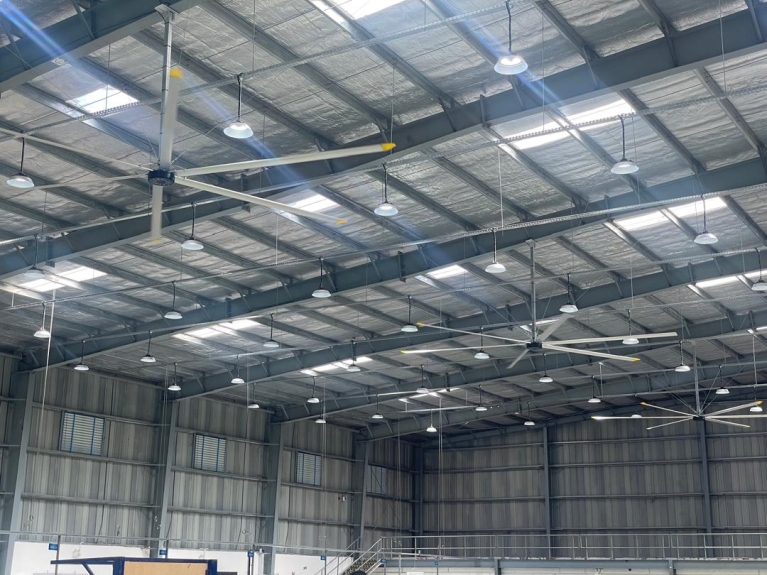
EAA recently opened a 3,510 square metre building, which will enable the business to double its production and workforce. Heat mitigation was integrated into the design from the outset: insulation, ventilation, natural light and shading all help keep the working environment cooler during the hottest months. Instead of air conditioning on the production floor, the building uses large, slow-moving ceiling fans (HVLS) and passive turbo vents on the roof that pull hot air out without using electricity.
EAA will continue using its older building as well, where it has already proactively worked to ensure workers are safe from heat risk – explained here. The new building is designed to achieve IFC EDGE certification for its efficient use of energy, water and materials, which requires at least 20% savings in energy, water and the carbon embodied in materials. Rooftop solar, leased with no upfront cost, powers daytime operations and a worker wellbeing centre, avoiding close to 500 tonnes of CO2 since 2022.
The fifth component of the system concerns EAA’s production schedule and buyer relationships. As recent research from New York University has shown, lead firms in global supply chains play a critical role in helping or hindering suppliers as they grapple with rising global temperatures and their impacts on workers. EAA is working to raise awareness among its customers and prospective customers about workplace heat, the risk it poses to workers, and the need to organise production to prevent and mitigate that risk. Human activity slows down during times of higher temperature, which is a natural physiological response to the increased risk from elevated body temperatures.
To raise awareness of workplace heat risks and the importance of climate adaptation, visitors to Maagrace are shown how the heat management system works and are presented with factory temperature data and incident reporting. EAA hopes this will better inform customers and encourage them to enquire about similar systems and data when visiting other factories.
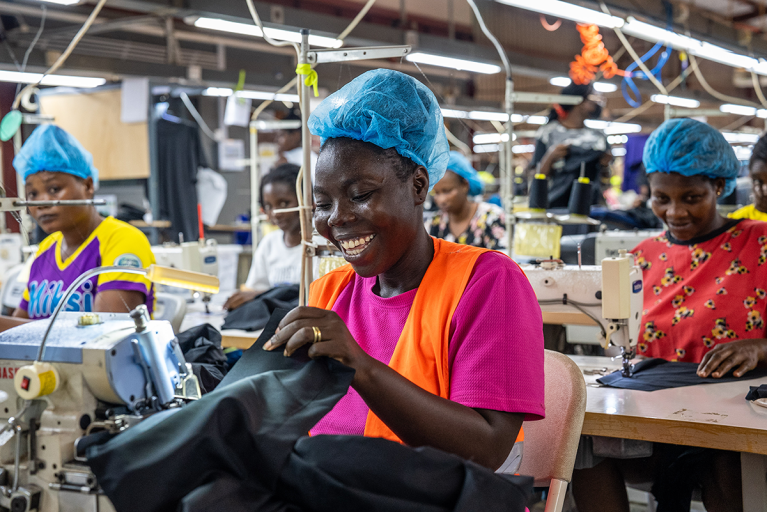
EAA system is a testament to how seriously the business takes its duty of care to workers and their right to work in a safe and healthy working environment. But EAA sees it as an investment in the success of its business and the resilience of its supply chains. When temperatures rise, absenteeism increases, productivity declines, accidents become more frequent and product quality suffers. Taking a proactive and preventative approach to heat risks to workers from rising global temperatures is not only the right thing to do, it also makes good business sense.