Get the latest
Subscribe to our email newsletters and stay up to speed on responsible business.
The Better Buying Partnership Index™ survey opens for its second cycle from 3 - 31 October 2022, calling on manufacturers in the apparel sector to rate their brand partners’ purchasing practices. Through this annual temperature check, the multi-stakeholder initiative The Industry We Want, in partnership with the Better Buying Institute, aims to collect data to help accelerate change in the garment and footwear industry. The findings will be presented at the OECD Forum on Due Diligence in the Garment and Footwear Sector in February 2023.
The Better Buying Partnership Index™ survey provides a consistent way to measure the impact of brands’ purchasing practices on production and creates a space for meaningful, two-way dialogue on the topic. The more data collected each cycle, the more robust the industry score and the tracking of change across the industry will be. This allows all actors to hold themselves accountable and inspire progress at large.
"It’s our turn to raise our voices and share experiences as manufacturers to transform the industry. Take 10 minutes to fill out the partnership survey and save months of effort. Give a chance to the brands to evolve with our feedback."
Bulent Alkanli, Managing Director of Meta Sourcing
The Industry We Want is now encouraging manufacturers in the apparel sector to have their say. Brands, retailers and other stakeholders are invited to share the survey with manufacturers. The survey is an anonymous questionnaire that consists of 15 questions and will take 5 - 10 minutes to fill in for each brand partner. It is available in, Bengali, Chinese (simplified), English, French, Italian, Japanese, Korean, Portuguese, Spanish, Turkish, and Vietnamese.
The information gained from the aggregated results will provide the industry with direct feedback from global suppliers on the state of purchasing practices. This will generate valuable insights that can be used to build better relationships between brands and suppliers, while also mapping out what processes are needed to improve in the sector.
The findings will be aggregated and presented at the OECD Forum, in connection to critical developments since last year's cycle. Further, the results will inform the purchasing practices metric on www.theindustrywewant.com, alongside wages and GHG emissions, and serve as a basis for a series of supplier seminars in the coming year.
"The survey gives suppliers the safe space to anonymously share feedback. This gives brands and retailers insights to act upon. They can start to find out how problems are occurring and work with suppliers to resolve them."
Leonie Barrie-Abraham, Vice President of Business Development at Better Buying
Results 2021: The industry needs equal, long-term partnerships
Throughout its first cycle in October 2021, the Partnership Index survey received over 500 responses from suppliers in the garment- and footwear industry.
The first findings of the Index made it clear how much pressure suppliers are facing. Key findings showed that brands are failing to provide suppliers with enough time, visibility, or fair financial practices and they do not seek suppliers’ ideas for product and process innovation.
The four most highly rated behaviours were communication, financial practices, the provision of visibility necessary to business operations and buyers doing their part to improve environmental performance and practices in the supply chain.
According to the responses:
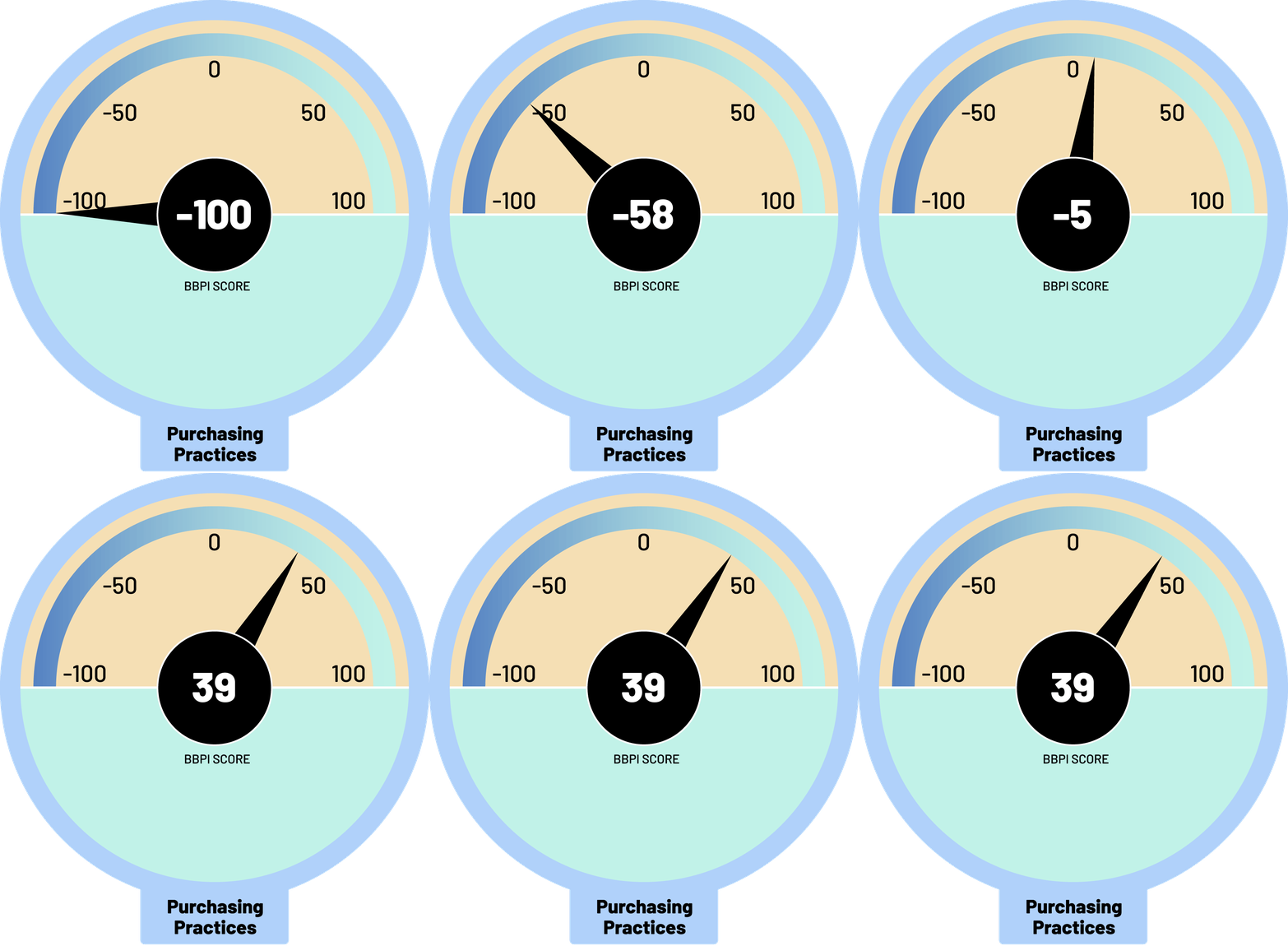
The percentage of Detractors are subtracted from the percentage of True Partners to calculate the company’s overall BBPI score, using a range of -100 to +100. The Industry We Want’s purchasing practices metric score for 2021 is 39.
Fair Wear and the Ethical Trading Initiative (ETI) were the first Multi-Stakeholder Initiatives to publicly disclose their full reports in an effort to increase commercial transparency in the sector. The data provided through the reports supports Fair Wear and ETI in their work on purchasing practices with their respective members.
About The Industry We Want
The Industry We Want is a multi-stakeholder initiative, led by Fair Wear, Ethical Trading Initiative and the Sustainable Apparel Coalition, dedicated to driving industry-wide progress on key issues across the garment and footwear sector, including living wages, responsible purchasing practices and GHG emissions.
The Industry We Want launched the drivers for change industry dashboard earlier this year, with the aim of measuring the garment and footwear industry’s progress on the wage gap, purchasing practices and GHG emissions. The partnership is geared towards ensuring dignity for workers in decent jobs, thriving businesses along the supply chain, and a positive impact on the planet.www.theindustrywant.com
ETI has been working in partnership with Fair Wear and SAC on The Industry We Want to advance industry-wide change on human rights at work in the garment and footwear industry. For this change, increased alignment and collaboration across global supply chains are required, and we at ETI are committed to playing our part.