Home

Main menu

  • About ETI
    • Our members
      • Public reporting performance
    • Who we are
      • ETI's origins
    • What we do
    • Global presence
    • Governance
    • Our team
      • ETI Board members
    • Our Strategy
  • Home
  • Why ETI
    • Why join ETI
  • ETI Base Code
    • Base Code overview
    • Base Code clause 1: Employment is freely chosen
    • Base Code clause 2: Freedom of association
    • Base Code clause 3: Working conditions are safe and hygienic
    • Base Code clause 4: Child labour shall not be used
    • Base Code clause 5: Living wages are paid
    • Base Code clause 6: Working hours are not excessive
    • Base Code clause 7: No discrimination is practiced
    • Base Code clause 8: Regular employment is provided
    • Base Code clause 9: No harsh or inhumane treatment is allowed
  • Our approach
    • Membership
    • Programmes
    • Transparency
    • Meaningful stakeholder engagement (MSE)
  • Our expertise
    • Climate change & Just transitions
    • Crisis response
    • Gender equity in supply chains
    • Worker representation
    • Forced labour & modern slavery
    • Responsible purchasing practices
      • RPP in manufacturing
    • Human rights due diligence
      • HRDD legislation tracker
  • Resources
    • Guidance & reports
    • Blog
      • Blog series: Extreme heat and risks to workers
      • Blog series: Tackling gender-based violence through GRACE
    • Issues
      • Human rights due diligence (HRDD): a complete guide for business
        • What is human rights due diligence?
        • Human rights due diligence legislation and regulatory requirements
        • How to implement human rights due diligence in your company
        • HRDD risk assessment for supply chains
        • Supplier engagement and human rights due diligence
      • Forced labour & modern slavery: a complete guide for business
        • What is modern slavery? Definitions, forms and scale
        • How to identify forced labour in your supply chain
        • Remediation: what to do when forced labour is found
        • Modern slavery legislation: what businesses need to know
        • EU Forced Labour Regulation: what it means for your business
        • How to write a modern slavery statement
        • High-risk sectors and sourcing regions for forced labour
        • Forced labour and migrant workers in supply chains
      • Responsible purchasing practices: what they are and why they matter
        • How to implement responsible purchasing practices
        • Responsible purchasing practices and legislation: what companies need to know
        • Responsible purchasing practices by sector
      • UK mandatory human rights due diligence: what businesses need to know
    • Case studies
    • Training
    • Events
      • ETI Insights series
    • Impact report 2024-25

Blog

A voice for Tanzanian women workers

1 June 2010
I remember Phillipina saying to me: "We try, try, try. We never give up."

HIV/AIDS meet offers lessons for ethical trade

27 May 2010
"I know my status - do you know yours?"

It's time for action on migrant workers, say industry leaders

22 April 2010
"We aim to provide a space to achieve progress on this global challenge," says ETI director Dan Rees.

Statement re: EHRC inquiry into meat and poultry sector

19 March 2010
The EHRC report released earlier this week into recruitment and employment in the meat and poultry processing sector provides the latest authoritative evidence that conditions for some workers in the industry are very poor.
Training for buyers

Buyers build their ethical skills

5 March 2010
ETI has launched a new ethical trade training course for buying staff, designed to help companies drive ethical trade to the heart of the way they do business.

Response to Sunday Times article

1 February 2010
ETI Statement in response to "Ugly low-pay truth of high street fashion", Sunday Times, 31 January 2010

Report on Primark inquiry

19 January 2010
A wide-ranging ethical trade action plan has been agreed with fashion retailer Primark following the conclusion of an in-depth inquiry commissioned by the Ethical Trading Initiative.
Momentum builds for action on wages

Momentum builds for action on wages

4 January 2010
An ETI members' meeting to discuss proposals for an Asia-wide 'floor wage' for garment workers has increased momentum for collective action to raise workers' wages in global supply chains.

Improving buying practices brings benefits for business and workers

14 December 2009
A roundtable discussion held by ETI on 10 DEcember 2009, saw leading garment making brands share experiences of improving their purhcasing practices in order to improve conditions for workers.

Ethical trade ‘quantum leap' gains support

Ethical trade ‘quantum leap' gains support

14 September 2009
ETI member companies to take 'quantum leap' forward in ethical trade
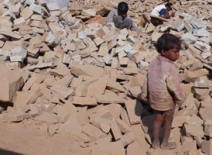
Children as young as 5 work in Indian stone quarries. Photo: Marshalls

ITN highlights child labour in Indian sandstone production

15 July 2009
Mohan, 5, said he enjoyed playing with hammers, but would rather be at school.

UK to quadruple funding for fair and ethical trade

7 July 2009
The UK Government is to quadruple its support for fair and ethical trade over the next four years, to a total of £18 million.

Pagination

  • Previous page ‹‹
  • Page 86
  • Next page ››

Get the latest

Subscribe to our email newsletters and stay up to speed on responsible business.
Subscribe

ETI elsewhere

  • Twitter
  • LinkedIn
  • YouTube

Footer

  • ETI Community
  • Accessibility
  • Contact
  • FAQ
  • Jobs at ETI
  • Press resources
  • Security & privacy
Other ETIs: Bangladesh, Denmark, Norway, Sweden
Ethical Trading Initiative | Registered No. 3578127